What Are OG Strains? The OG Kush Family, Explained
By Weedtip Editorial ·
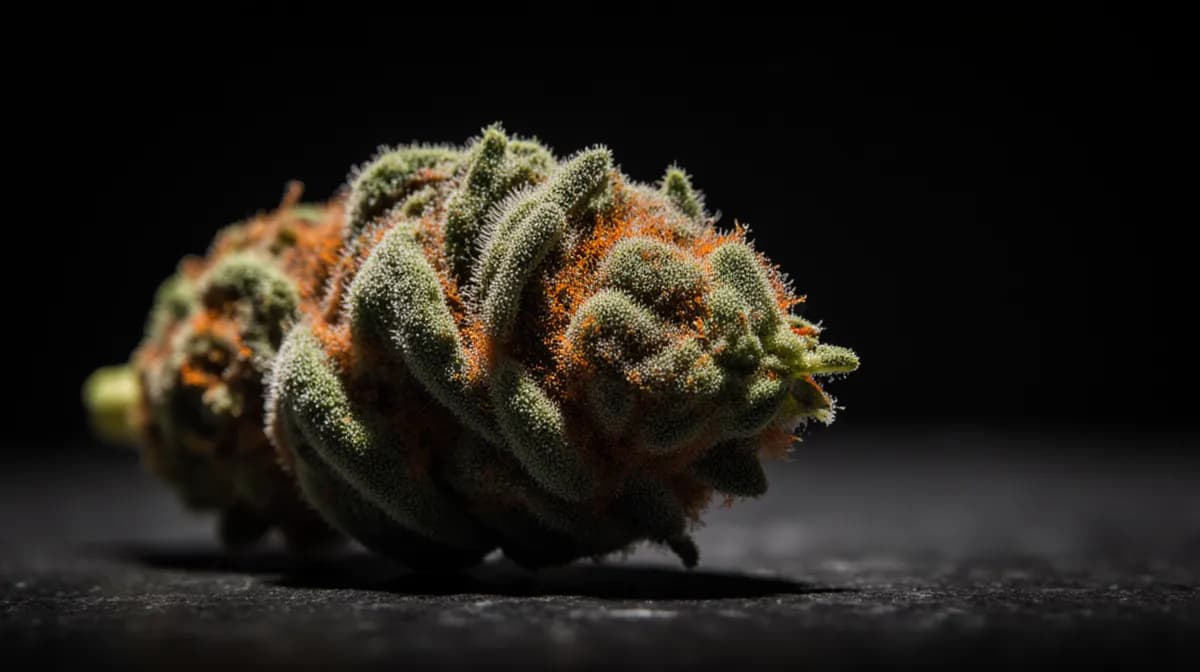
OG points to a real Southern California lineage descended from OG Kush, but plenty of menu names just borrow the letters. Here is how to tell them apart.
"OG" is the most overused two letters on a dispensary menu. It points to a real lineage — a Southern California family of cultivars descended from OG Kush — but it also gets stapled onto names with no genetic connection at all. Here is how to tell the difference.
What OG actually means
Nobody can prove where the abbreviation came from. Three explanations have circulated since the 1990s and all three are still repeated by growers who were there:
- Ocean Grown. The most widely cited version. The story goes that a grower described the plant as ocean grown rather than mountain grown, referring to coastal Southern California, and OG stuck.
- Original Gangster. A nod to the strain's status as an early, defining West Coast cultivar.
- Overgrown. A reference to Overgrow.com, an influential cannabis growing forum where a lot of 1990s and 2000s genetics were traded and documented.
What matters for shopping is that OG functions as a family name, not a quality grade. A strain called OG is claiming descent from OG Kush or a close relative. Whether it delivers on that claim depends on the breeder and the grower.
OG Kush: the strain the family is named after
OG Kush surfaced in Southern California in the early-to-mid 1990s and became the backbone of the West Coast market. Its exact parentage is disputed and probably unrecoverable — the most commonly repeated account traces it to a Chemdawg phenotype crossed with Hindu Kush and Lemon Thai, but no one holds definitive records from that era.
Despite the name, OG Kush is generally classified as a hybrid rather than a pure Kush indica. You will see it labeled as an indica-leaning hybrid on most menus, though classification varies by lab and by cultivator.
The aroma is the giveaway. OG Kush and its descendants are known for a heavy, fuel-forward smell — gassy and skunky, with pine and sharp citrus underneath. That profile comes largely from three terpenes that tend to dominate the family: myrcene, limonene, and caryophyllene. Terpene content varies batch to batch even within the same cultivar, so the label on the jar tells you more than the strain name does.
You can see reported lab data and descriptions on the OG Kush strain page.
The core of the OG family
A handful of cultivars are consistently recognized as genuine OG descendants or selections:
- SFV OG — a San Fernando Valley selection, typically sharper and more citrus-forward than the parent.
- Tahoe OG — a Northern California cut, often described as heavier and more earthy.
- Fire OG — an OG Kush and SFV OG cross, named for the red hairs, with a very pronounced fuel character.
- Larry OG — an Orange County selection leaning more lemon than diesel.
- Ghost OG — a specific OG Kush phenotype that circulated as a clone-only cut.
- [Skywalker OG](https://weedtip.com/strain/skywalker-og) — Skywalker crossed with OG Kush, one of the more indica-leaning members.
OG Kush is also upstream of an enormous number of modern cultivars. Girl Scout Cookies, and therefore the entire Gelato and Sherbert branch that dominates current menus, traces back to it. In that sense a large share of what is sold today is OG family whether or not the name says so.
Names that borrow the letters
Plenty of products use OG as a suffix with no verifiable link to the lineage. That is not necessarily a knock on the flower — it may be excellent — but it does mean the name tells you nothing about what to expect. Treat OG in a product name as marketing until the lab panel or the breeder backs it up.
How to shop the family without guessing
Strain names are inconsistent across growers, and the same name can produce noticeably different flower depending on who grew it and how it was cured. A few things are more reliable than the name:
1. Read the terpene panel if the dispensary provides one. A high-myrcene, limonene-heavy result is characteristic of the family; a panel dominated by terpinolene is not, whatever the jar says.
2. Ask what the cut is. Budtenders at shops with good sourcing often know whether flower came from a clone-only cut or a seed run.
3. Note the cultivator, not just the strain. Consistency across your purchases tracks with the grower more than with the name.
4. Check the harvest date. Aroma compounds degrade over time, and the fuel character the family is known for fades in old flower.
Effects people report from the OG family skew relaxing and body-heavy, but individual responses vary considerably with the batch, the format, the amount consumed, and the person. Nothing about a strain name predicts how it will land for you.
For more on how aroma compounds shape a cultivar, see our guide to what terpenes are.
FAQ
What does OG mean in weed strains?
It is an abbreviation with no confirmed origin. The three explanations most often given are Ocean Grown, Original Gangster, and a reference to the Overgrow.com forum. In practice it signals a claimed relationship to the OG Kush lineage rather than any measure of quality or potency.
What strain is OG Kush?
OG Kush is usually classified as an indica-leaning hybrid that appeared in Southern California in the 1990s. Its parentage is disputed, with Chemdawg, Hindu Kush, and Lemon Thai the most commonly cited ancestors. Its defining trait is a fuel-and-pine aroma driven by myrcene, limonene, and caryophyllene.
Are OG strains indica?
Most are labeled indica or indica-leaning hybrid, but the family includes a wide range. Those labels are broad shorthand and do not reliably predict effects — chemical profile and batch matter more than the category on the tag.
What makes a strain OG?
Genetically, descent from OG Kush or one of its recognized selections. Commercially, nothing — any grower can put OG in a name. The check is whether the breeder documents the lineage and whether the terpene profile matches the family's fuel-forward character.
Explore the OG family
Compare cultivars, aroma profiles, and reported lab data across the Weedtip strain library, then check which local shops carry them. For adults 21 and over, or qualifying patients where a state medical program applies. Cannabis laws and product availability vary by state.