Can You Buy Pipes and Papers at a Dispensary?
Most dispensaries sell some smoking gear, but selection varies a lot by shop and by state. Here is what is usually on the shelf, what is not, and when a smoke shop is the better stop.
Updated October 3, 2026
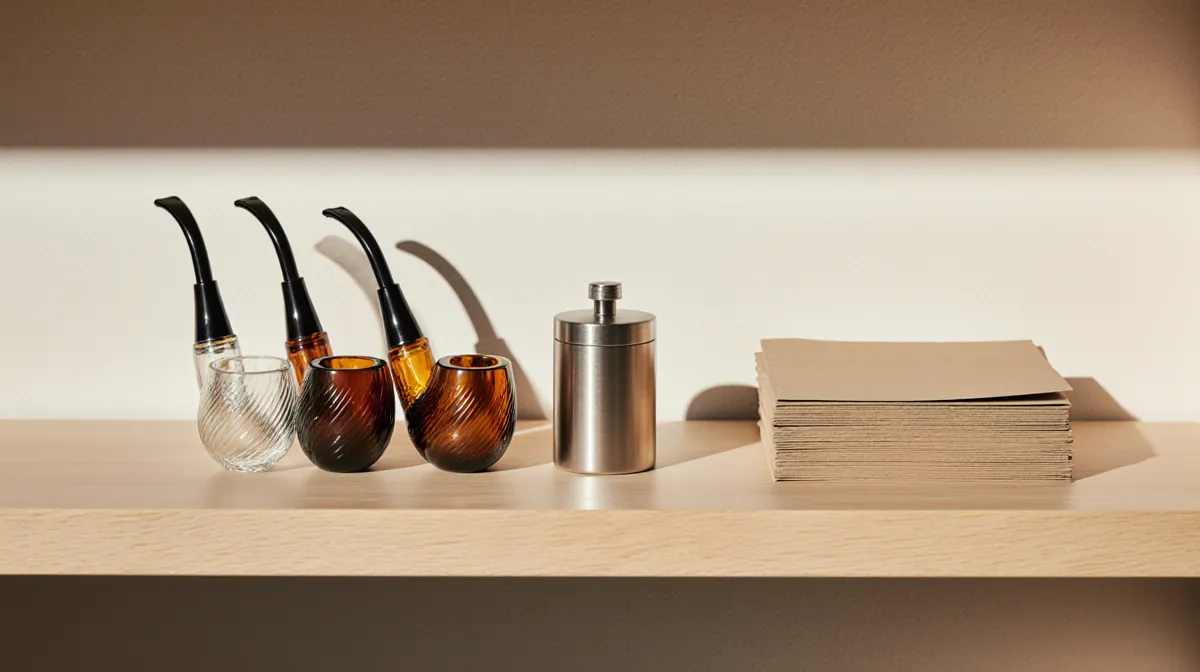
The short answer: usually yes, but the selection is hit or miss
Most licensed dispensaries in the United States sell at least some smoking gear alongside the flower and edibles. Papers, cones, lighters, grinders and a small rack of glass are common. What varies enormously is depth. One shop has a locked case of handblown pipes and three brands of rolling papers. The shop two towns over has a single shelf by the register with a few generic grinders and a bowl of branded lighters.
So the honest answer to "can I pick up a pipe while I am there" is probably, but do not build your evening around it. If you need a specific item tonight, it is worth checking the shop's online menu or calling ahead. Accessory inventory is the part of a dispensary that turns over least predictably, and it is often the part least likely to be listed online.
This matters more than it sounds. A lot of first visits end with someone holding an eighth of flower and no way to smoke it, because they assumed the shop worked like a convenience store. It does not. Dispensaries are built around regulated cannabis products first, and everything else is secondary.
What is usually on the accessory shelf
The items that show up most reliably are the cheap consumables, because they sell fast and take up little room:
Rolling papers and cones. Nearly universal. Pre rolled cones have largely taken over the shelf space that loose papers used to own, since they are easier for newer smokers. If you want a particular brand or size, that is where selection gets thin.
Lighters. Almost always, often with the shop's name on them. Some shops hand them out free with a purchase.
Grinders. Common, usually in two tiers: a plastic or cheap metal one for under twenty dollars, and a nicer aluminum one for considerably more. If you are new to grinders and want to know what the teeth and chambers actually do, our guide to weed grinders covers the basics.
Batteries for vape carts. Very common, since the shop also sells the carts those batteries thread into.
Storage. Glass jars, small sealed containers, sometimes humidity packs.
Glass pipes and one hitters. Frequently stocked, usually a modest range. The nicer the shop's retail design, the more likely there is real glass in a case rather than a bin of imports.
Bongs and water pipes. Less consistent. Larger pieces take up floor space and tie up money, so plenty of dispensaries skip them entirely or keep two or three. If you are weighing a pipe against a bubbler against a full water pipe, our comparison of bongs, pipes and bubblers explains how they differ in practice.
Dab gear. Nails, bangers, torches and e rigs tend to appear only at shops with a serious concentrate selection.
What dispensaries often do not carry
A few gaps surprise people. Hardware for home growing is the big one: in states where home cultivation is legal, seeds and clones may be sold, but lights, tents, nutrients and pots generally are not, because that is a different retail category with different licensing. Repair parts are another gap. If you break a downstem or lose a bowl piece, a dispensary is rarely the place to match it.
Vintage or collectible glass, heady art pieces and the long tail of niche brands also mostly live elsewhere. And in some jurisdictions dispensaries are limited in what non cannabis merchandise they can sell at all, which is a regulatory question rather than a business decision.
Why selection varies so much from shop to shop
Three things drive the difference.
The first is state and local rules. Some states treat cannabis accessories as ordinary retail goods a licensed shop may sell freely. Others restrict what can sit on a dispensary shelf, how it can be displayed, or whether it can be sold to a customer who is not also buying cannabis. These rules differ by state and sometimes by city, and they change, so what is true in one market says nothing about another.
The second is floor space and licensing cost. Square footage inside a licensed dispensary is expensive, and every shelf foot given to a water pipe is a shelf foot not holding flower, which turns over faster at a better margin. Smaller shops ruthlessly cut the slow movers.
The third is the shop's own identity. Some dispensaries deliberately position themselves as full service and curate real glass. Others see accessories as a courtesy add on and stock accordingly. You can usually tell within ten seconds of walking in.
Dispensary gear versus a smoke shop
If gear is the main thing you need, a smoke shop or head shop will almost always beat a dispensary on selection, price and depth. That is their entire business. They carry more brands, more sizes, more price points, and the staff spend their days talking about glass rather than about cannabinoids.
The tradeoff runs the other way too. A smoke shop in most states cannot sell you regulated cannabis, and the two kinds of store operate under completely different rules, which we unpack in dispensary versus smoke shop. Age rules also differ: dispensaries in adult use markets are strictly 21 and over, or the equivalent for registered medical patients, while smoke shop age limits are set by a separate set of laws.
A practical approach for a first purchase: buy the cannabis and the consumables at the dispensary, since you are there anyway and papers and a grinder are cheap, then shop for a nicer piece separately once you know what you actually like using.
How to check before you go
Dispensary menus are built around cannabis products, and accessories are often the last category to get photographed and uploaded. That means a menu with no gear listed does not prove the shop has none.
Three ways to find out:
- Scan the online menu for an accessories or gear category. When it exists, it is usually accurate on the big items like glass and batteries, and less reliable on papers and lighters.
- Call. Thirty seconds answers it, and staff do not mind. This is the only reliable method for a specific brand or a specific size.
- Ask when you arrive. Plenty of accessory stock never makes it online at all, and the person at the counter knows exactly what is in the case.
You can browse shops and their menus by location on Weedtip, starting with dispensaries near you. Weedtip is a directory: you look here and buy at the shop itself, so the menu you see is a pointer to the store rather than a checkout.
At the counter
A few things worth knowing before you pay.
Accessories and cannabis are often taxed differently, because cannabis excise taxes generally do not apply to non cannabis goods. Your receipt may look odd as a result. Payment is the bigger issue: many dispensaries are cash or debit only for reasons rooted in federal banking policy, and that constraint applies to the pipe as much as to the flower.
Returns are usually more generous on gear than on cannabis. Opened cannabis products are typically non returnable by regulation, while an unused grinder still in its packaging is an ordinary retail return at most shops. Policies differ, so ask before you leave the counter rather than after.
Finally, purchase limits apply to cannabis, not to accessories. A grinder does not count against the amount of flower you can buy in a day. Those limits are set per state and they change, so if you are near the line it is worth confirming the current figure for where you are shopping.
Everything on the shelf, cannabis and gear alike, is for adults 21 and over or registered medical patients where a state program allows it. And a closing reminder that applies no matter how your gear shopping goes: cannabis itself stays in the state where you bought it.