How Does Weed Delivery Work? Cannabis Delivery Explained
Cannabis delivery is legal in some states and banned in others, and the rules shape everything from who can accept the bag to how you pay. Here is how a licensed delivery order actually works, start to finish.
Updated August 13, 2026 7 min read
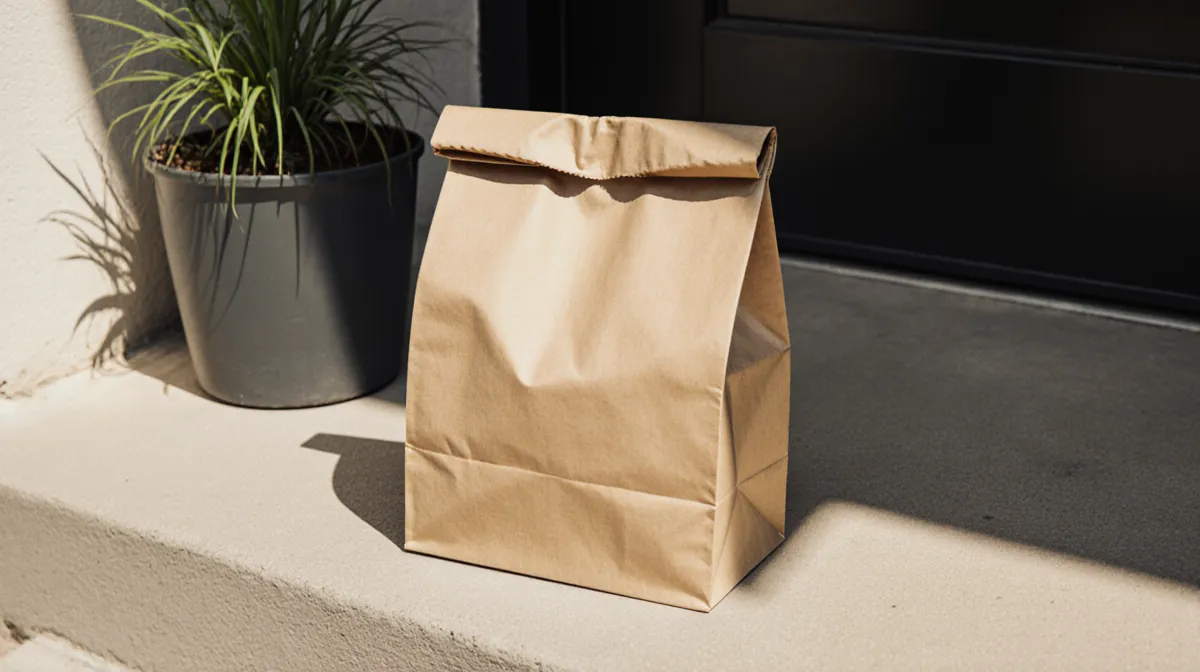
Cannabis delivery looks simple from the outside: you pick products, someone drives them over, you show ID at the door. Underneath that is a licensing system that decides whether delivery exists in your area at all, who is legally allowed to hand you the bag, and what the driver can carry in the vehicle. Knowing how the pieces fit together makes the difference between a smooth first order and an hour spent wondering why the app will not let you check out.
Here is what actually happens between the moment you place an order and the moment it reaches your door.
Delivery is a state and city question first
Legal cannabis delivery only exists where the state has written rules for it, and even then, local governments often get a say. Some states with legal adult-use sales allow delivery statewide. Others license it but let individual cities and counties ban it inside their borders, which is why a shop twenty minutes away may deliver to one neighborhood and not the next one over. A few legal states permit retail storefronts and no delivery at all. Medical programs sometimes allow delivery in places where adult-use delivery is still prohibited.
These rules change often, so treat anything you read, including this article, as a starting point rather than a final answer. The reliable move is to check whether licensed delivery services actually serve your address right now. Browsing cannabis delivery services on Weedtip will show you which licensed operators cover your area, and an empty result usually means delivery is not available where you are rather than that you searched wrong.
One rule holds everywhere: deliveries stay inside state lines. A licensed driver cannot cross into another state with cannabis in the car, and neither can you. Nothing about a legal purchase in one state travels legally into another.
Who is actually bringing it
Delivery is not one business model. Depending on your state, the operation behind your order might be any of these.
A storefront dispensary with its own drivers. The shop you would otherwise visit in person keeps a delivery fleet, and the products come off the same menu and the same inventory.
A delivery-only licensee. Some states issue a separate license for operators who run a warehouse or depot instead of a retail floor. There is no lobby to walk into, and the entire business is the delivery service.
A technology platform that connects you to licensed retailers. The app or website takes the order, but a licensed dispensary fulfills it and its employee drives it. The platform is the storefront window, not the seller.
The distinction matters mostly for expectations. Storefront-attached services often have narrower delivery windows built around store hours. Delivery-only operators may run scheduled routes through a zone, so your order arrives in a two hour block rather than in thirty minutes. Platforms can show you a wider menu because they aggregate several shops, but the fulfilling retailer still sets what is genuinely in stock.
Weedtip is a directory, so you browse here and order from the licensed operator itself. No cannabis is sold or paid for on Weedtip.
Placing the order
The flow is close to any other delivery app, with a few cannabis-specific steps layered in.
Age and identity verification comes first. Expect to upload or enter a government-issued ID before you can check out, and expect that ID to be checked again in person. Adult-use delivery is 21 and over everywhere it exists. Medical programs set their own qualifying ages and may also ask for your patient card or registry number. Our guide to how old you have to be to buy weed covers how the age rules break down.
Your address has to be eligible. Most services will not deliver to a hotel, a dorm, a college campus, a federal building, a park, a parking lot, or any address outside their licensed zone. Many require a private residence. Some allow a workplace, many do not. If your address is rejected at checkout, the delivery zone or the property type is usually why.
Order minimums and menus. Delivery services commonly set a minimum order value, since sending a car out for a single pre-roll does not pay. Menus also shift faster than they look like they do, because delivery inventory is often held on the vehicle itself.
Purchase limits still apply. States cap how much cannabis one adult can buy in a day, usually with separate limits for flower, concentrates and edibles. Delivery does not create a loophole around that. If your cart is over the limit, checkout will typically block it, and drivers carry a limited amount of product per trip under state rules as well.
What happens at the door
Delivery is the part of the process most people have questions about, and it is more structured than a pizza handoff.
The person who ordered has to be the person who receives. Drivers check a physical ID against the order name and often scan it. A roommate, a partner or a neighbor accepting on your behalf is generally not allowed, and no legal service will leave cannabis on a porch, in a mailbox, or with a front desk. If nobody answers, the order goes back.
You will usually sign something. Many states require a delivery manifest, a receipt signature, or a photo of the completed handoff. The driver may also be required to complete the transaction within a set distance of the vehicle.
Products arrive sealed and labeled. Everything should be in child-resistant, tamper-evident packaging with the state-mandated label intact. That label is worth reading before the driver leaves, since it carries the batch number, the potency figures and the testing information. Our guide to reading a cannabis label walks through what each field means.
Check the order at the door. Substitutions happen when something sells out mid-route, and it is far easier to sort out a wrong item while the driver is still there than by phone afterward. Returns on cannabis are limited by law in most states, so accuracy at handoff matters.
Paying for a delivery
Payment is the other place delivery diverges from what people expect. Because cannabis remains federally illegal, most major card networks do not process cannabis purchases, and that constraint follows the product out to the curb. Cash is still the most widely accepted method, and many services also take debit through a point-of-sale terminal the driver carries, or ACH and app-based payment set up in advance.
Two practical notes. First, ask what the driver accepts before the vehicle is dispatched, because arriving with the wrong payment method usually means the order goes back undelivered. Second, drivers often carry limited change, so exact cash is appreciated. Our article on how dispensaries handle payment explains why the payment landscape looks the way it does.
Delivery also carries costs a walk-in visit does not. A flat delivery fee is common, tipping the driver is customary the way it is with any delivery job, and cannabis excise and sales taxes still apply on top. The number on the menu is rarely the number you hand over.
Delivery or pickup?
Delivery earns its fee when getting to a store is the hard part: no car, a shop that closes before you finish work, mobility limits, bad weather, or a licensed retailer that is simply far away. It is also the more private option, since nothing about the exchange happens in a public lobby.
Pickup wins on speed, selection and conversation. Store menus are usually deeper than what fits on a delivery vehicle, same-day pickup beats most delivery windows, and standing at the counter lets you ask a budtender questions, compare two jars, and change your mind. If you are choosing between shops in your area, the dispensary directory lists licensed storefronts with hours and menus, and what to bring to a dispensary covers what to have on you before you go.
A reasonable default: use pickup when you want to explore or ask questions, use delivery when you already know what you want and the trip is the obstacle.
Signs a delivery service is licensed
Unlicensed delivery exists in nearly every market, including markets that are otherwise fully legal, and it is the single biggest risk in this part of the industry. Licensed operators publish a state license number, verify your ID before and at the door, deliver products in sealed packaging with compliant labels and lab testing, issue a receipt, and charge tax. Services that skip ID checks, hand over unlabeled product, refuse to name a license, or promise to cross state lines are not operating legally, and there is no consumer recourse when something goes wrong with an untested product.
If you are unsure, look the operator up in a directory that lists licensed businesses, and start there rather than with a phone number passed along by someone else.