Indica vs Sativa: What Is the Difference?
Indica and sativa started as botanical terms, not effect predictions. Here is what the labels really mean on a dispensary menu, and what to look at instead.
Updated August 13, 2026 8 min read
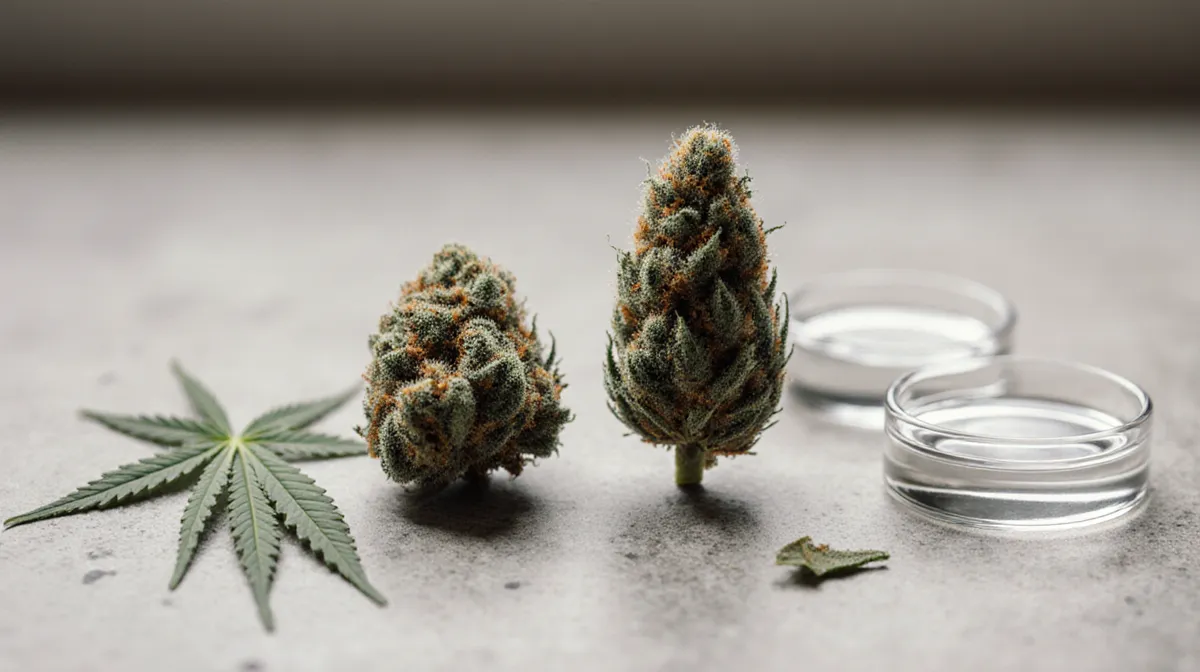
The short answer
Walk into any dispensary and the menu will sort its flower into three buckets: indica, sativa, and hybrid. The shorthand you will hear is that indica is the relaxing, heavy, end of the day option, that sativa is the alert, talkative, daytime option, and that hybrids land somewhere between the two.
That shorthand is useful as a starting point for a conversation. It is not a reliable prediction of how a given jar will land, and it is not what the words originally meant. The terms describe plant shape and growing history far more than they describe experience, and a century of crossbreeding has blurred even that. If you take one thing away from this page, make it this: treat indica and sativa as a rough opening filter, then narrow down using the specific chemistry printed on the label.
Where the labels actually came from
Indica and sativa are botanical terms. They were coined by eighteenth century naturalists to describe cannabis plants that looked different and grew in different places. Sativa referred to the tall, lanky, thin leafed plants cultivated across Europe and Central Asia, largely for fiber and seed. Indica referred to shorter, denser, broad leafed plants documented in South Asia, cultivated for resin.
For a grower, this distinction still carries weight. A plant with indica structure tends to be squat and bushy, finishes flowering faster, and suits an indoor tent or a short outdoor season. A plant with sativa structure tends to stretch tall, take longer to finish, and prefer a long warm season. Growers absolutely notice the difference.
The problem is the leap from plant shape to human experience. Nothing about leaf width determines what a chemical profile does once it is in a person. The two things drifted apart the moment breeders started crossing everything with everything, which happened decades ago.
Why the categories no longer sort much
Almost every cultivar sold in a legal store today is a hybrid, whatever the tag says. Modern cannabis genetics run through a small number of heavily crossed lineages, and the plants have been bred for potency, yield, aroma, and mold resistance far more than for lineage purity. When a menu calls something an indica, it usually means the plant leans that way in structure, or that it descends mostly from indica leaning parents, or in some cases simply that the grower expects it to feel mellow.
Two jars labeled sativa on the same shelf can have very different aroma, very different cannabinoid content, and very different reported effects. Two jars labeled indica can too. Meanwhile the same cultivar grown by two different farms, harvested at different times, and cured differently can produce noticeably different results. Growing conditions and harvest timing shift a plant's chemistry in ways the category label does not capture at all.
Researchers who have run chemical analyses on commercial samples keep finding the same thing: the indica and sativa labels correlate loosely at best with what is actually in the jar. That does not make the words useless, but it does mean they are a starting point, not an answer.
The chemistry that does the sorting
If the label is a weak signal, what is a stronger one? Two things, and both are usually printed somewhere on the package or listed on the menu.
The first is cannabinoids. THC is the compound most associated with intoxication, and the percentage on the label tells you roughly how concentrated it is. It is worth knowing that a higher number does not automatically mean a better or more intense experience, and buying purely by percentage is one of the most common first time mistakes. Our explainer on what THC percentage actually means goes deeper on why. CBD is the other cannabinoid you will see listed most often, and products that carry a meaningful amount of it are often described by shoppers as feeling different from THC dominant products at the same potency.
The second is terpenes. These are the aromatic compounds that make one jar smell like pine and another like citrus peel or diesel. They exist throughout the plant world: the same compounds show up in hops, lavender, black pepper, and lemon rind. A growing number of dispensaries now print a terpene breakdown, and many shoppers find it a better guide to what they will enjoy than the indica or sativa tag.
A few you will see near the top of most lists: myrcene, which is common in cultivars marketed as relaxing, limonene, which carries a bright citrus aroma, pinene, which smells like a conifer forest, and caryophyllene, which reads peppery. The idea that cannabinoids and terpenes interact to shape the overall character of a product has a name, and it is worth reading about in our piece on the entourage effect, including the honest caveat that the science on it is still developing.
None of this is a promise. Terpene content is a description of what is in the jar, not a guarantee of how you will respond to it. Individual response varies a lot, and the same product genuinely does land differently on different people.
Format matters as much as strain
Here is something that surprises a lot of newer shoppers: the delivery format often shapes the experience more than the cultivar does.
Inhaled products, whether flower, a pre roll, or a vape cartridge, tend to come on quickly and taper over a shorter window, which makes it easier to gauge as you go. Edibles work through the digestive system, take considerably longer to show up, and last much longer once they do. That timing gap is the single most common reason a first experience with edibles goes sideways, and it has nothing to do with whether the package says indica or sativa.
Concentrates are a different lane again: far more potent by weight, usually consumed in small amounts, and generally not where a first time shopper should start. If you are comparing categories, our overview of what to expect from your first dispensary visit walks through the formats side by side.
So before you agonize over indica versus sativa, settle the format question. Then the strain conversation becomes much more useful.
How to shop without leaning on the label
A practical approach that works better than picking a bucket:
Start with the occasion, not the category. Telling a budtender "I want something for a quiet evening at home" or "I am going to a friend's cookout on Saturday" gives them far more to work with than "give me an indica." They know their current inventory and how customers have described it, which is information no label carries.
Read the aroma. If you are buying flower and the store lets you smell it, use that. People are surprisingly consistent about preferring products whose smell they like, and aroma is a direct read on terpene content.
Check the label, not just the tag. Look at the cannabinoid percentages and any terpene breakdown before you look at the indica or sativa marker. Products in a legal store are tested and labeled for a reason, and the label is the most specific information in the room.
Keep notes. The single most effective tool is a short record of what you tried, what the label said, and what you thought of it. After a handful of purchases, patterns show up in your own notes that no category system would have predicted for you. You can browse cultivar profiles on our strains directory and terpene explainers in the terpene library to put names to what you liked.
Go slow with anything new. Different product, different farm, different batch: treat each one as an unknown quantity regardless of what the category says.
What to ask at the counter. Budtenders field this exact question all day, so there is no need to feel awkward about it. A few questions that tend to produce useful answers:
What is moving right now in this category, and what do people say about it? What is the terpene profile on this one? Is there anything with a lower THC percentage you would recommend for someone still figuring out what they like? How long does this format usually take to come on?
Notice that none of those questions require the word indica or sativa. Budtenders cannot make medical recommendations, and a good one will not pretend to. What they can do is describe their inventory accurately and tell you what customers report, which is exactly what you want.
The bottom line
Indica and sativa are real botanical terms that have been repurposed as a consumer shorthand, and the shorthand has not aged well. Nearly everything on a modern menu is a hybrid, the labels correlate loosely with actual chemistry, and how a product is grown, harvested, and cured moves the needle in ways the category never captures.
Use the tag as a conversation starter with a budtender. Then let the label, the aroma, the format, and your own notes do the real work. That approach will steer you better than any two word category ever could.
Weedtip is a directory: we help you find shops and compare what is on their menus, and the purchase happens at the store. Cannabis is for adults 21 and over, or for qualifying patients under a state medical program, and the rules differ from state to state and change over time, so check what applies where you are.