Indoor vs Outdoor Weed: What Is the Difference?
Dispensary menus sort flower into indoor, greenhouse and sun grown, with prices that can differ by double. Here is what each method actually changes about the jar, and what matters more than the tier on the label.
Updated August 13, 2026 7 min read
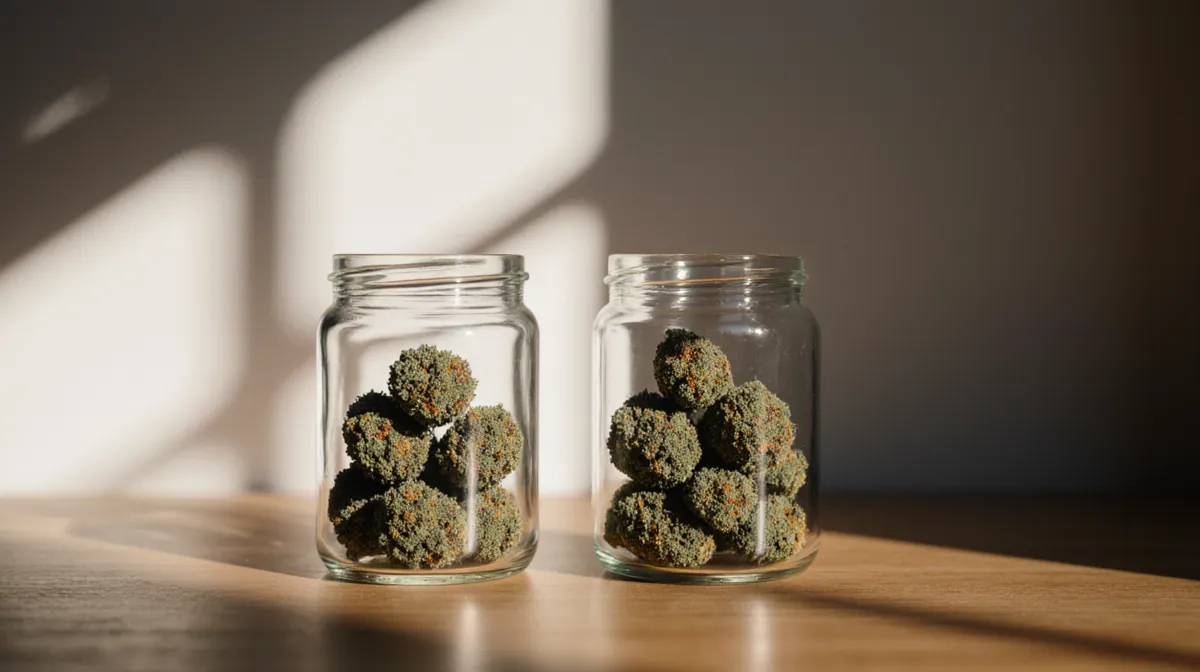
Walk into almost any dispensary and the menu will sort flower into tiers you did not ask about: indoor, greenhouse, sun grown, light dep. The price gap between the top and bottom of that list can be double, sometimes more, for jars that look broadly similar behind the glass. Nobody explains it, and most shoppers end up guessing that indoor means good and outdoor means cheap.
That guess is roughly half right, and the half that is wrong costs people money. Here is what each label actually describes, what it changes about the flower in the jar, and how to decide which one is worth paying for.
What "indoor" actually means
Indoor flower is grown entirely under artificial light, in a sealed room where the grower controls essentially every variable: temperature, humidity, carbon dioxide levels, the exact hours of light and dark, and the nutrients the plant gets. Nothing about the weather matters. A room in Michigan in February can run identical conditions to a room in California in July.
That control is the whole product. Because the grower dictates the environment, they can push a plant toward the traits that sell: dense, tight buds, heavy trichome coverage, deep purple or bright orange coloring, and a strong nose when the jar opens. They can also run the same cultivar over and over and get close to the same result each cycle, which is why indoor brands can build a reputation around a specific strain.
The catch is cost. Indoor rooms consume large amounts of electricity for lighting, climate control and dehumidification, and that expense lands in the retail price. Indoor is generally the most expensive flower on any menu, and in most markets it is the only tier that reaches the premium shelf.
Outdoor and sun grown
Outdoor cannabis is grown in the ground or in pots under open sky, on the sun's schedule, usually harvested once a year in the fall. "Sun grown" is a marketing term for the same thing, chosen because "outdoor" picked up a reputation years ago as the bargain bin.
The reputation is dated. Outdoor plants get far more light than any lamp can produce, and they get more room, so a single outdoor plant can yield several times what an indoor plant does. That yield is why outdoor flower is cheap. It is not automatically why it would be worse.
What outdoor gives up is consistency. The plant is exposed to rain, wind, temperature swings, dust, pollen and whatever pests are in the area, and a bad week of weather near harvest can affect an entire crop. Outdoor buds are often less dense and less visually striking than indoor, and the coloring tends to be more muted. Moisture during flowering also raises the risk of mold, which is one reason lab testing matters and why every legal product carries a test result you can look up. Our guide on how to read a cannabis label walks through what those panels cover.
Well grown outdoor from a dry climate and a careful farm can be excellent flower at a fraction of the indoor price. Poorly grown outdoor is genuinely rough. The variance is simply wider than it is indoors.
Greenhouse and light deprivation
Greenhouse sits between the two. The plants grow under glass or poly, using sunlight as the primary light source, with the structure providing shelter from rain, wind and pests. Growers can add supplemental lamps on dark days and heat when it gets cold, so they get some of indoor's control at a fraction of indoor's power bill.
"Light dep," short for light deprivation, is a greenhouse technique rather than a separate tier. The grower pulls blackout tarps over the structure to shorten the plant's day artificially, which triggers flowering on the grower's schedule instead of the calendar's. That lets a greenhouse farm harvest two or three times a year rather than once, and it lets them time a harvest to good weather.
In practice, greenhouse and light dep flower often lands close to indoor in appearance and aroma while pricing closer to outdoor. On a lot of menus it is the best value in the case, and it is worth asking about specifically, because it does not always get its own shelf label.
Does indoor actually hit harder?
This is the question underneath the whole debate, and the honest answer is that growing method is a weaker predictor of experience than most people assume.
Indoor flower does tend to test higher for THC, partly because of the controlled environment and partly because indoor is where growers put their most pampered plants. But the percentage on the label is a much worse guide to how a product will feel than its reputation suggests, and a few points of THC is not the difference between a mild session and a strong one. We covered why in THC percentage explained.
What genuinely shapes the character of a high is closer to the plant's chemistry as a whole: its cannabinoid mix and its terpene profile, the aromatic compounds that make one jar smell like lemon peel and another like diesel or pine. Terpenes are volatile, and they are affected far more by drying, curing and storage than by whether the plant saw the sun. A carelessly dried indoor jar can smell like hay. A carefully cured outdoor jar can be loud enough to fill a room.
Genetics matter too, and genetics travel across all three methods. The same cultivar grown indoors, in a greenhouse and outdoors will be recognizably related. If you liked a particular strain, that name is a better starting point than the tier it was grown in. Browsing by strain is often more useful than browsing by price bracket.
Effects also vary between individuals, and reported experiences are not guarantees. Two people can smoke the same flower and describe it completely differently.
How to judge a jar, whatever the label says
Growing method is one input. These tell you more:
Smell. A strong, distinct aroma when the jar opens is the single best signal available to a shopper. Faint or grassy usually means age, poor curing or rough handling. Many shops keep smell jars on the counter for exactly this reason.
Moisture. Good flower gives slightly when squeezed and springs back. Crumbling to dust means it dried out. Feeling damp or spongy is a reason to ask questions.
Trim. Hand trimmed flower keeps more of its trichomes intact than machine trimmed, and it is usually described that way on the label if the grower did it.
Harvest or packaged date. Almost every legal jar carries one. Fresher is better, and a jar packaged eight months ago has lost aroma no matter how it was grown. Once it is yours, storage determines how long it stays good.
Lab panel. Legal flower is tested for potency and contaminants before it can be sold. That testing is the reason licensed shops are a different proposition from the unregulated market, and testing requirements vary by state.
What to ask at the counter
Budtenders handle this question constantly and usually have opinions worth hearing. Useful phrasings:
"What is the best value flower in the case right now?" This gets past the tier labels and toward what the staff actually thinks is well grown this week.
"Which of these was harvested most recently?" Freshness cuts across price brackets.
"Do you have any greenhouse or light dep in this price range?" Names the middle tier directly, since it is not always labeled.
"Can I smell this one?" Shops with smell jars will say yes, and it is the fastest way to sort a menu.
A note on what none of this changes: cannabis is regulated state by state, and rules on purchase limits, product types and who may buy differ everywhere and change over time. Everything sold at a licensed shop is for adults 21 and over, or for patients in a state medical program. Never take cannabis across state lines, regardless of the laws on either side.
The short version
Indoor buys you consistency and cosmetics, and you pay for the electricity. Outdoor buys you volume at low cost with wider variance in quality. Greenhouse and light dep sit in the middle and are frequently the smartest buy on the menu.
None of the three is a reliable proxy for how good the flower is or how it will feel. Aroma, freshness, cure and genetics do far more work, and those are things you can assess at the counter. If you want to compare what shops near you are actually stocking, start with the dispensary directory and read the menus.