Can You Drive With Weed in Your Car?
Transporting a legal purchase is usually fine, but where you put it matters and driving impaired is illegal everywhere. Here is how open container style rules, possession limits, and state lines work.
Updated August 13, 2026 8 min read
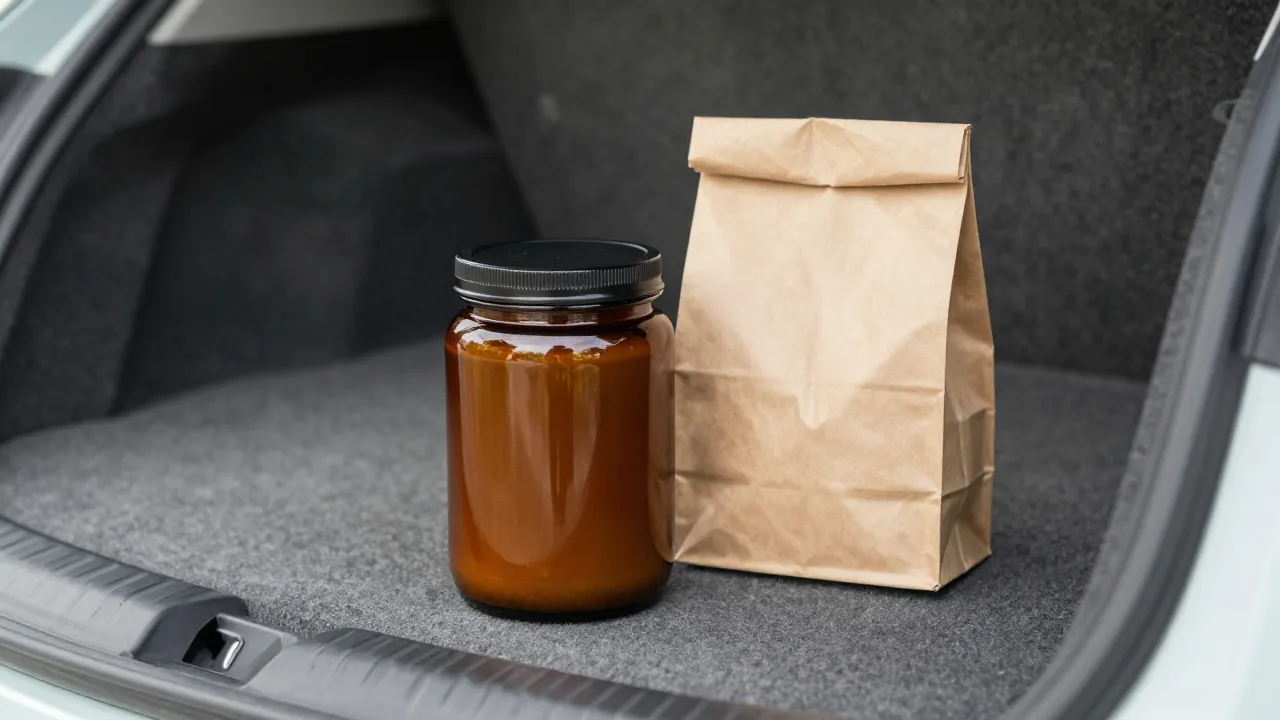
Cannabis is legal for adults in a growing number of states, and every one of those states still has rules about what happens once that purchase goes into a vehicle. The short answer is that transporting cannabis inside a state where it is legal is usually allowed, that how and where you store it matters a great deal, and that driving under the influence is illegal everywhere in the country with no exceptions. The longer answer depends heavily on which state you are in, so treat everything below as a general map rather than a legal ruling.
Weedtip is a directory. We help people find shops and compare what is on the shelf. We are not lawyers, and cannabis rules change often, sometimes in the middle of a legislative session. Check your own state's current statutes or ask an attorney before relying on any of this.
Two very different questions
People usually mean one of two things when they ask about weed and cars, and the answers are not the same.
The first is possession: can the product legally be inside the vehicle at all, and where does it have to sit? This is a transport question, and it is governed by state possession limits and by rules that look a lot like open container laws for alcohol.
The second is impairment: are you safe and legal to be behind the wheel? That is a driving under the influence question, and it is far more serious. A sealed jar in the trunk is a paperwork issue at worst. Driving while impaired is a criminal charge in every state, including states where the product itself is perfectly legal to own.
Keeping the two straight helps, because a lot of confused advice online blends them together.
Open container rules apply to cannabis too
Most states that allow adult use have adopted something similar to the open container concept that already applies to alcohol. The general shape of the rule is that cannabis in a vehicle should be in a sealed or resealable container, and it should not be accessible to the driver while the car is moving.
In practice, states differ on the details. Some specify the trunk or a locked glove box. Some accept the original child resistant packaging the dispensary sent you home with, since that packaging is resealable by design. Some address only whether the container has been opened, others focus on whether anyone can reach it from a seat. A few states have rules for smoking or vaping in a parked car as well, which is a different question again and is commonly prohibited in public places.
The habits that keep you out of trouble in most places are simple. Leave the product in the bag the shop gave you. Keep it closed. Put it in the trunk, or in a cargo area behind the last row if you drive an SUV. Do not open a pre-roll tube, a vape cart box, or an edible package in the car, and do not stash anything in a cupholder, a door pocket, or the center console.
If you want to know what your purchase actually is before you drive off, the packaging tells you. The label on the back carries the potency numbers, the batch date, and the testing information.
Possession limits still count in the car
The amount you are carrying does not stop mattering because it is in a vehicle. State possession limits apply to whatever is on your person and, generally, to whatever is in the car with you. Limits are usually written as a maximum of flower by weight, with separate ceilings for concentrates and for total THC in edible form, and they vary widely from state to state.
This catches people on shop-hopping trips. Buying the daily limit at one dispensary, driving to a second, and buying the limit again can put the total in the car over the line even though each individual sale was legal. If you are planning a route that hits more than one shop, know the number first. Our overview of how much weed you can buy at a dispensary covers how these limits are typically structured and why they differ.
Medical patients often have higher limits than adult use customers in the same state, and in some states patients can carry amounts that would be over the line for everyone else. If that applies to you, carry your card or state registration alongside the product.
Driving impaired is the part that actually ruins your day
Every state prohibits driving under the influence of cannabis. There is no legal state, no medical program, and no card that changes this. Penalties look like alcohol DUI penalties: arrest, license consequences, fines, court, and in some circumstances jail.
Cannabis impairment is also harder to time than alcohol. Effects arrive at different speeds depending on the product. Inhaled products come on within minutes, while edibles can take a long time to arrive and then last for hours, which is exactly the pattern that leads people to think they are fine when they are not. If you want a sense of that timeline, see how long edibles take to kick in.
Testing is messy too. THC and its metabolites can stay detectable in the body long after any effect has worn off, so a positive test does not by itself prove impairment. Some states have set specific blood THC thresholds anyway, and some use a zero tolerance standard where any detectable amount supports a charge. Neither approach maps cleanly onto how you actually feel. The practical takeaway is that you cannot reason your way to a safe number, and the only reliable plan is not driving after consuming.
Give yourself real time, or hand someone else the keys, or use a rideshare. If you would rather not drive to the shop at all, many markets have licensed delivery services that bring an order to your door instead.
Do not cross state lines
This one has no nuance to it. Cannabis remains federally illegal, so the moment a product crosses a state border it becomes a federal matter, regardless of how legal it was on either side of the line. Two neighboring legal states do not create a legal corridor between them. Driving a legal purchase from one to another is still a federal offense, and it is also usually a violation of the receiving state's own rules, since legal markets are closed systems where product has to come from a licensed in-state shop.
The same logic applies to national parks, military bases, tribal land with its own rules, and federal buildings, all of which can sit inside a legal state while operating under different law. Flying is its own separate mess, covered in can you fly with weed.
If you are travelling and want product at the other end, buy it at the other end from a licensed shop, assuming the destination allows it. Visitors can shop in most adult use states, though some medical-only states serve residents or reciprocal patients only.
Passengers, and getting pulled over
Passengers are not exempt. In most states the open container style rules cover the whole passenger compartment, not just the driver's seat, and consuming while riding along is typically prohibited. Some states write penalties for passenger consumption directly into the statute. The rear seat of a car is not a private space in the eyes of the law.
If you do get pulled over, the calm version goes like this. Keep your hands visible, be polite, and do not volunteer a tour of the vehicle. You are generally required to provide license, registration, and insurance. Beyond that, you can decline to answer questions about what is in the car and you can decline consent to a search, and doing so politely is not an admission of anything. If you are a medical patient, saying so and showing your card is usually sensible. If the stop escalates, stop talking and ask for a lawyer. None of this is legal advice, and an attorney in your state is the right person for the specifics.
Odor deserves a note. In some states the smell of cannabis alone no longer establishes probable cause for a vehicle search, and in others it still does. This is one of the most actively litigated corners of cannabis law right now, and it changes. A sealed container in the trunk avoids the question entirely.
The short version
Buy from a licensed shop, leave the packaging sealed, put it in the trunk, stay under your state's limit, do not consume in the car, do not drive after consuming, and do not cross a state line with it. That set of habits keeps you inside the rules in nearly every legal state, even though the fine print differs everywhere.
If you are figuring out where to buy in the first place, browse dispensaries by state and city to see what is licensed near you. Weedtip does not sell cannabis or take payments. You browse here, then buy at the shop.
Everything above is general information for adults 21 and over, or for registered patients where a state medical program sets a different age. Cannabis law varies by state and changes frequently, so confirm your local rules before you drive anywhere with a purchase in the car.