Can You Grow Your Own Weed at Home?
Some states let adults grow a few plants at home, some tie it to a medical registration, and a few allow retail sales while banning cultivation outright. How to find out which kind of state you are in, and what a grow really asks of you.
Updated October 5, 2026
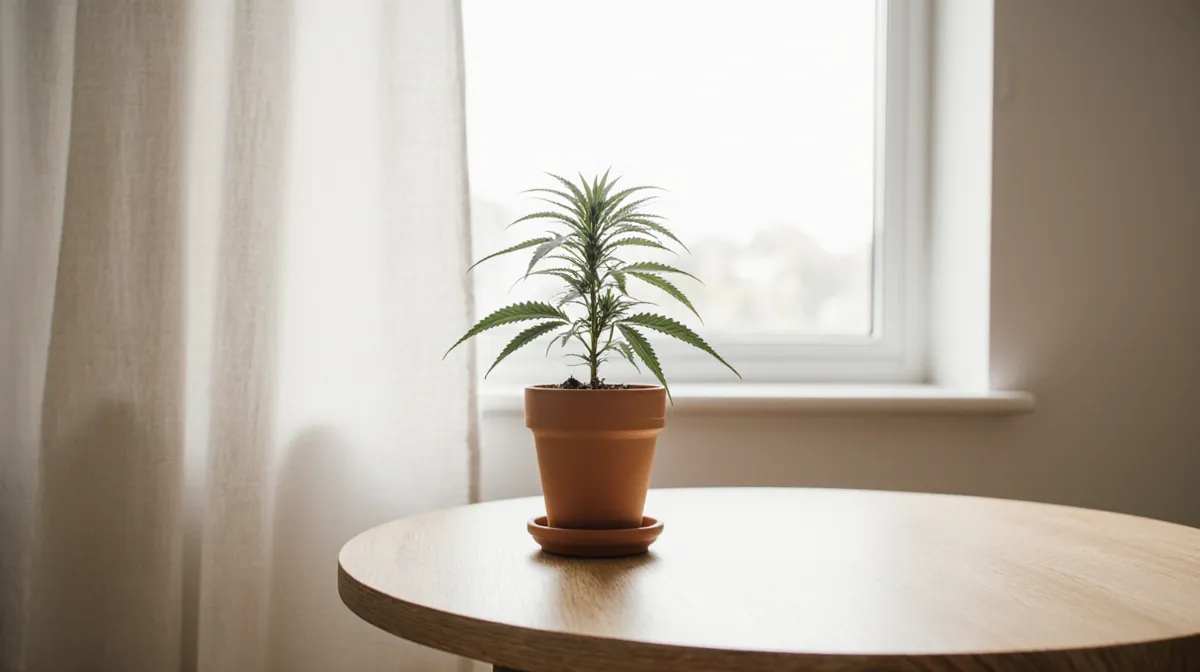
Buying from a licensed store is not the only way adults get cannabis in a legal state. A number of states let adults grow a few plants at home, several tie cultivation to a medical registration, and a few run full retail markets while keeping home growing off limits entirely. The answer to "can I grow my own" is almost never about cannabis in general. It is about which of those states you happen to live in.
Here is how to work out which bucket you are in, the rules that tend to repeat wherever home growing is allowed, and what a grow actually asks of you before you spend money on seeds.
The answer depends on your state, not on federal law
Cannabis remains illegal under federal law, so there is no national home cultivation rule to look up. What governs in practice is state law, and sometimes city or county rules layered on top of it. That means two adults living an hour apart can face completely different answers, and both can be right about their own address.
It also means the answer changes. Legislatures revisit cannabis almost every session, ballot measures pass, and regulators issue new rules to implement them. Plant counts get raised, delayed start dates arrive, and pilot programs expire. Treat anything you read about a specific state, including this page, as a prompt to go check the primary source rather than a settled fact.
One rule does not vary: do not move plants, seeds, or harvested cannabis across a state line. Interstate transport is a federal matter no matter how permissive either state is, and that holds even between two neighboring states that both allow home growing.
The three buckets states fall into
Adult-use states that allow home growing. This is the most common arrangement among states with recreational sales. The typical shape is a small number of plants for adults 21 and over, with a cap per household that is lower than the per-adult number multiplied by the number of adults living there. Many of these states also distinguish mature, flowering plants from immature seedlings and allow more of the latter.
Medical programs that allow registered patients to cultivate. Here the right to grow attaches to the registration rather than to age. Some programs open cultivation to every patient, some limit it to patients who live a long way from a dispensary or who show another hardship, and some require a separate cultivation permit, a fee, or a designated caregiver listed on the registry. If you hold a card, your program's own patient handbook is the document that answers this.
States where you can buy but not grow. A handful of states built regulated retail markets without authorizing home cultivation, or wrote a start date for it into the law that has not arrived yet. It surprises people, because legal storefronts feel like a signal that everything else is permitted too. It is not.
And of course cannabis remains prohibited outright in some states, where cultivation tends to carry the heaviest penalties of anything in this article. Our overview of where cannabis is legal is a map-level place to start before you dig into your own state's rules.
The conditions that repeat wherever growing is allowed
States that permit home growing rarely just permit it. They attach conditions, and the same handful show up again and again:
- Counts are usually per household. Two adults under one roof generally do not get to double the limit. Read the statute for the household cap, not only the per-person number.
- Mature and immature plants are counted separately. A limit written as a small number of flowering plants plus the same number of seedlings is a common pattern.
- Plants have to be out of public view. Expect language about an enclosed, locked space, which in practice rules out a front yard or an unfenced balcony.
- Minors cannot have access. Every one of these programs is built for adults 21 and over, or for registered patients where a program allows younger participants with guardian involvement, and secure storage is usually written into the law.
- You cannot sell what you grow. Home cultivation is for personal use. Even giving it away is capped or prohibited in many states, and selling without a license is treated as unlicensed commercial activity.
- Registration is sometimes required. A few states want a permit, a fee, or a notification on file before the first plant goes in the ground.
Then there is the layer that has nothing to do with cannabis law. A lease can prohibit growing even where the state allows it. So can an HOA. Federally subsidized housing is its own problem, since the federal position has not changed. Local ordinances on odor, electrical work, and home occupancy can apply, and in most states a city is free to be stricter than the state. Checking your lease is as practical a step as checking the statute.
Where to look up the rules that actually apply to you
Go to the agency, not to a forum. Most states run a cannabis regulator with a public website, often the same office that publishes the license lookup you would use to verify a store. Search for your state's name plus "cannabis control" or "cannabis regulatory agency" and look for a home cultivation or personal cultivation page. Medical patients should start with their registry's patient FAQ instead.
Two things to watch for while reading. First, check whether the page has been updated since the most recent legislative session, because stale guidance is the main way people end up with a wrong number. Second, keep purchase rules and cultivation rules separate in your head. How much you may buy at once, which we cover in how much weed can you buy, is a different limit from how much you may possess at home from your own plants, and the second is often written specifically to accommodate a harvest.
What a grow actually asks of you
Legal and practical are different questions. A full cycle from seed to a jar you would want to open runs months, not weeks, and the plant does not pause for your schedule. The real costs people underestimate:
- Electricity and equipment. Lights, fans, and a timer at minimum for an indoor grow, and the power bill that comes with running them on a flowering schedule.
- Space and airflow. Plants get large. They also need moving air, which is the cheapest insurance against mold and mildew.
- Humidity control. This is the single most common reason a home harvest ends up unusable, and it matters most during drying, when the plant is most vulnerable and you are least able to fix a mistake.
- Odor. A flowering plant is loud. Neighbors, landlords, and shared hallways all notice.
- Attention. Pests, nutrient problems, and watering mistakes compound quietly. Nobody is covering for you if you travel.
There is also something you give up. A licensed product is tied to a tested batch, with potency and contaminant results you can look up by batch number. Nothing you grow at home comes with that, so you are the only quality control there is. If you want a sense of what the commercial process involves before you try to approximate it in a closet, how weed is grown walks through the full seed to shelf path.
Seeds and clones, and where legal growers get them
In states that allow home cultivation, licensed stores are often allowed to sell the starting material too, though not every store chooses to. Seeds keep for a long time and are frequently sold feminized, which raises the odds of a plant that flowers. Clones are rooted cuttings of an existing plant, genetically identical to it, and they skip germination and sexing at the cost of a shorter shelf life and a fussier first week. Availability moves around, so it is worth checking menus for the shops near you rather than assuming.
A directory like this one is for that kind of browsing. You can compare what stores in your area list and then buy at the shop itself, since Weedtip does not sell cannabis or take payments. And the interstate rule applies to starting material as much as to flower: ordering seeds in from somewhere more permissive is not a workaround.
If growing is not an option where you live
Plenty of people in legal states never grow, and the regulated market is built on the assumption that most will not. If your state does not allow it, or your lease does, the sensible version of the same impulse is learning to read what is on the shelf: potency labels, harvest dates, terpene listings, and the batch results behind them. That gets you most of the control a home grow promises, with none of the months.
And if your state does allow it, the order of operations is worth repeating. Read the statute, read your lease, confirm the current plant count with the regulator, and only then think about seeds.