Do Weed Strain Names Actually Mean Anything?
Strain names are invented by breeders and growers, not certified by anyone, so two jars labeled Blue Dream can hold genuinely different plants. Here is where the names come from, why they drift, and what on the label is worth more than the name.
Updated September 1, 2026
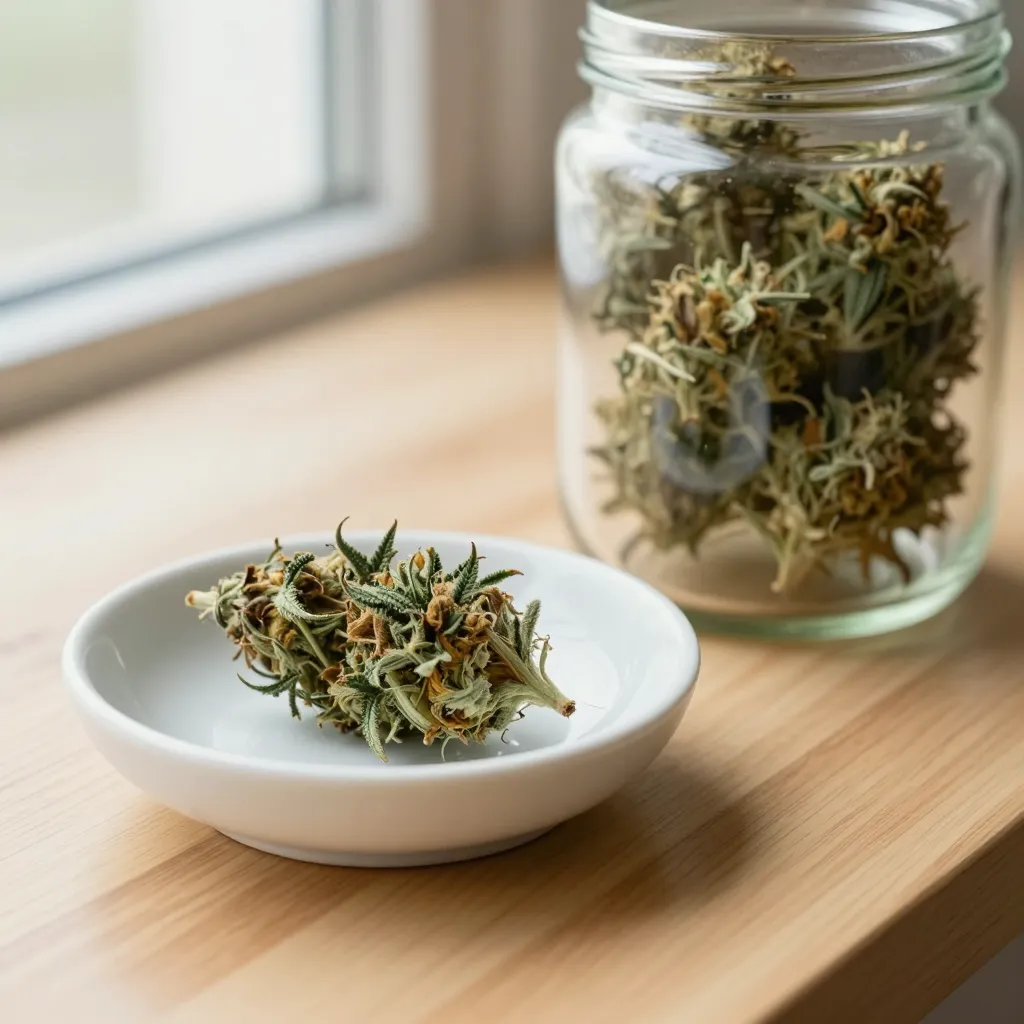
Walk into any dispensary and you will meet a wall of names: Blue Dream, Wedding Cake, Gelato 41, Sour Diesel, Runtz. They sound like they mean something specific, the way a grape variety or a coffee origin does. Shoppers reasonably assume that a jar labeled Blue Dream in one shop contains the same thing as a jar labeled Blue Dream in a shop two states over.
It usually does not. Strain names in cannabis are somewhere between a variety name, a brand, and a rumor. That does not make them useless, but it does mean you should know what they can and cannot tell you before you let a name decide your purchase.
Where strain names come from
Almost every name on a dispensary shelf was invented by a breeder or a grower, not assigned by any authority. There is no cannabis equivalent of the seed certification bodies that govern names like Honeycrisp or Pinot Noir. Nobody registers a name, nobody verifies that a plant matches it, and nobody stops a second grower from using it.
Names typically come from one of a few places. Some describe a cross, so Gelato 41 signals a specific numbered selection out of the Gelato line. Some describe aroma, which is where the long parade of dessert names comes from. Some come from geography or lineage, like the OG Kush family. And a growing number are pure marketing, chosen because they sound appealing on a menu.
Historically, a lot of this naming happened in an unregulated market where record keeping was informal at best. Those names carried over into licensed shops, along with all their inconsistencies.
Why two jars of the same strain can be different plants
Even setting aside outright mislabeling, there are real biological reasons the same name produces different results.
Cannabis grown from seed does not come out uniform. A single seed lot from one cross produces plants with visibly different structure, aroma, and chemistry. Growers call these individual expressions phenotypes, and they will typically grow out many seeds, then select the one plant they like best and keep it alive as a mother plant. Everything they sell under that name afterward is a clone of that one selection.
Two growers working from the same cross will almost certainly select different phenotypes. Both are entitled to call the result by the strain name. Both are, in a sense, correct. The flower still ends up different.
On top of that, growing conditions push results around considerably. Light intensity, nutrients, temperature, when the plant is harvested, and how it is dried and cured all change the final aroma and chemistry. A cutting of the same genetics grown by two different cultivators can test differently and smell noticeably different.
And then there is the simple fact that names get attached loosely. A batch might be renamed to something more marketable, or labeled from memory somewhere upstream. There is no chain of custody for a name the way there is for the product itself in state tracking systems.
What indica and sativa on the label are really telling you
Most menus sort strains into indica, sativa, and hybrid, and most shoppers read those as a promise about effect: indica for winding down, sativa for daytime. The categories are far shakier than that.
Originally the terms described plant structure and growing origin, not experience. Decades of crossbreeding have left almost everything on a modern shelf as a hybrid of hybrids, so the label is usually describing a lineage estimate rather than a distinct plant type. Chemical analyses of commercial cannabis have repeatedly found that products sharing an indica or sativa designation do not reliably cluster together in their cannabinoid and terpene content.
That does not mean the labels are worthless as shorthand. It means they are a rough, inherited convention rather than a specification. We covered this in more detail in Indica vs Sativa: What Is the Difference?.
The information on the label that is harder to fake
If the name is soft, what is solid? Mostly the parts of the label that come from a testing lab rather than from a marketing decision.
The certificate of analysis. In licensed markets, batches go to a testing lab, and the results follow the batch. Testing requirements and how much detail reaches the consumer vary by state and change over time, but where a full panel is available it tells you far more about what is in the jar than the name does. Our guide to reading a cannabis label and its lab results walks through the sections.
The terpene profile, if it is published. Terpenes are the aromatic compounds behind why one jar smells like citrus peel and another like pine or pepper. If you have noticed that you consistently prefer flower heavy in one particular terpene, that pattern will follow you across strain names more reliably than the names themselves will. If a shop publishes terpene percentages, they are worth a glance, and if it does not, your nose at the counter is doing the same job.
The cultivator. A grower who produces consistent flower tends to keep producing consistent flower, because they are running the same selected cuttings in the same room with the same process. Remembering which cultivator you liked is often more predictive than remembering which strain you liked.
The harvest or packaged date. Flower changes as it ages, and terpenes are volatile. A recent date on a well sealed package is a better sign than an impressive name.
One number that deserves less weight than it gets is the THC percentage, which is a poor stand in for how a product will actually feel. That is a whole topic on its own, covered in THC percentage explained.
How to shop when the name is all you have
Plenty of menus list little more than a name, a category, and a THC number. That is workable if you shift what you are asking for.
Describe the experience you are after rather than naming a strain, and describe aromas you have liked. Budtenders in a busy shop handle this all day, and they know which items on their shelf actually move and why. They can also tell you which cultivators their regulars come back for.
Ask to smell the flower if the shop allows it, since many keep sniff jars at the counter. Aroma is genuine information about the terpene content of that specific batch, and it belongs to the jar rather than to the name.
Keep your own notes. A photo of the label, the cultivator, the batch, and a line about how you found it is worth more after a few months than any amount of strain lore, because it is a record of your own responses rather than someone else's. Effects vary a lot between people, so your notes are the only dataset that is actually about you.
Buy small when you are trying something unfamiliar. Purchase limits, product formats, and available sizes differ by state and by shop, and rules change, so check what your local market offers.
When a strain name is genuinely useful
None of this means you should ignore names. They do real work.
Within a single cultivator, a name is fairly reliable. If a grower is running a kept cutting, their Wedding Cake this month is genuinely close to their Wedding Cake last month, batch variation aside. That makes the name a useful reorder key inside one brand.
Names also carry lineage information that predicts aroma families reasonably well. Anything in the OG Kush line tends toward fuel and pine notes, and the dessert crosses tend toward sweet and creamy notes. That is a soft signal, but a real one.
And names give you and your budtender a common vocabulary. Saying you liked something citrus forward from the Gelato line communicates a lot faster than trying to describe it from scratch.
The healthy way to hold a strain name is as a hypothesis rather than a guarantee. It suggests roughly what family a product belongs to and roughly what it might smell like. The lab results, the cultivator, the harvest date, and your own notes are what tell you whether this particular jar is the one you wanted. If you want to explore by name anyway, the strain directory is a reasonable place to start, and you can see which shops near you carry what before you go.
Cannabis products are for adults 21 and over, or for qualifying patients in state medical programs. Cannabis laws differ by state and change frequently, so check your own state's current rules, and never carry cannabis across state lines.