Hemp vs Marijuana: What Is the Difference?
Hemp and marijuana are the same plant species, split by a legal threshold of 0.3 percent delta-9 THC by dry weight. Here is what that line actually measures, why hemp-derived THC products exist, and what it all means when you are shopping.
Updated August 18, 2026
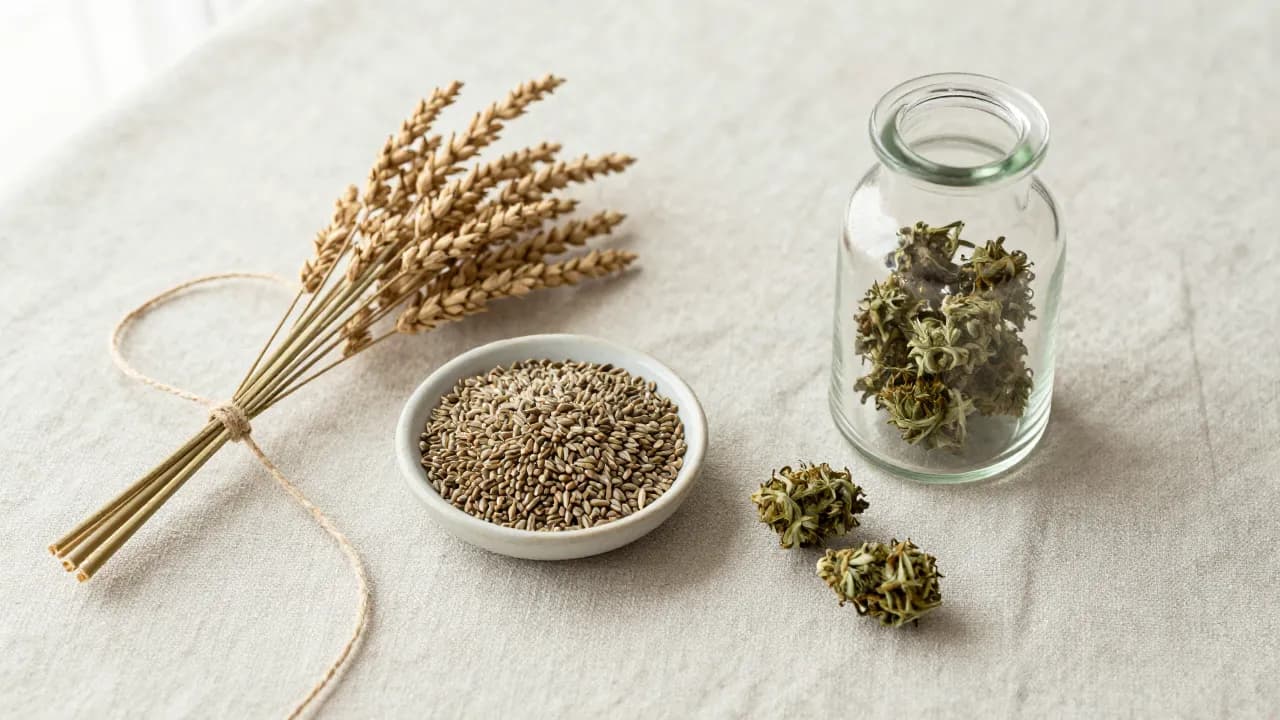
Hemp and marijuana are the same species
Botanically, there is no separate hemp plant. Both hemp and what most people call marijuana are Cannabis sativa L., the same species, capable of cross pollinating with each other. A hemp field and a dispensary grow room can contain plants that a botanist would file under the same name.
The split is legal, not biological. Somebody had to draw a line so that rope, seed oil and fiber could be farmed without the crop being treated as a controlled substance, and the line that ended up in United States federal law is a chemistry threshold rather than a description of the plant.
That single fact explains most of the confusion shoppers run into. When a gas station sells a THC gummy and a licensed dispensary two blocks away sells one that looks nearly identical, the difference between them is usually which side of that legal threshold the source plant fell on, not what species it was.
The 0.3 percent line
Under the 2018 federal Farm Bill, cannabis containing no more than 0.3 percent delta-9 THC by dry weight is classified as hemp, an agricultural commodity. Anything above that number is marijuana, which remains federally controlled. Rules change and states layer their own definitions on top, so treat that figure as the current federal starting point rather than a permanent fact.
Two things about the threshold are worth understanding, because almost every odd product on the market exists in the gap they create.
First, it measures one specific compound. The test looks at delta-9 THC, the cannabinoid responsible for most of what people associate with being high. It does not cap CBD, CBG, CBN, or the various THC variants that chemists have since learned to produce from hemp material. A plant can be legally hemp and still be rich in cannabinoids.
Second, it measures by dry weight of the plant, not of the finished product. Extracting and concentrating compounds from a compliant hemp crop can produce an oil that behaves nothing like the field it came from. This is the mechanism behind most hemp-derived THC products on shelves today. Our explainer on delta-8 versus delta-9 THC walks through how those conversions work and where they sit legally.
What hemp is actually grown for
Hemp farming splits into three fairly different businesses, and knowing which one a product came from tells you a lot.
Fiber and grain. The oldest use. Tall, densely planted stalks harvested for cordage, textiles, insulation, paper and animal bedding, plus seed pressed for food oil. These varieties are bred for stem length and seed yield, and their flowers are unremarkable. Hemp seed oil and hulled hemp seeds sold in grocery stores come from here and contain essentially no cannabinoids.
Cannabinoid hemp. Grown much more like dispensary cannabis: spaced plants, flowers harvested and dried, then extracted. Bred for high CBD or CBG output while keeping delta-9 THC under the threshold. Nearly all CBD products trace back to this category.
Conversion feedstock. A newer branch. Bulk hemp biomass grown cheaply, extracted for CBD, and then used as a chemical starting point for other cannabinoids. This is where most hemp-derived delta-8, delta-10, HHC and hemp THC edibles begin.
Only the second and third categories produce anything that competes with a dispensary shelf, which is why "hemp" on a label can mean anything from a food ingredient to a product that will get somebody high.
Where the two paths lead at retail
Cannabis sold through a state licensed dispensary comes from marijuana as the law defines it. It is grown under a state program, tracked from clone to sale, tested by a licensed lab for potency and contaminants, packaged in child resistant containers, and sold only to adults 21 and over or to registered medical patients where a state program allows it. If you want to see what those results look like, our guide to reading a cannabis label breaks down the certificate of analysis.
Hemp-derived products move through ordinary commerce instead. They turn up in convenience stores, vape shops, wellness retailers and online storefronts. Some come from careful manufacturers who publish full lab panels and batch numbers. Others do not, and independent testing over the years has repeatedly found hemp-derived products whose actual cannabinoid content did not match the label. There is no single national testing standard the way there is inside a state cannabis program.
The regulatory picture here is genuinely unsettled. A number of states have restricted or banned intoxicating hemp products, several have folded them into their cannabis regulations, and federal rulemaking continues to shift. What is sold openly in one state may be prohibited in the state next door, and rules can change between when this was written and when you read it. Never assume a hemp-derived product is legal everywhere, and never carry cannabis of any kind across state lines.
What this means when you are shopping
A few practical takeaways for a first-time buyer trying to make sense of two shelves that look alike.
"Hemp-derived" does not mean "will not get you high." It describes the source material and its legal status, nothing about the finished product's effects. A hemp-derived THC gummy and a dispensary THC gummy can be built around closely related molecules.
"Contains hemp seed oil" usually does mean no cannabinoids. Cosmetics, food and skincare listing hemp seed oil are using a pressed seed ingredient. Seeds carry no meaningful cannabinoid content.
CBD is not exclusive to hemp. Most CBD on the market comes from hemp for legal reasons, but the compound is identical whichever plant it was extracted from. Dispensaries carry CBD and balanced products too. Our CBD versus THC explainer covers how they differ.
Ask for the lab result either way. Batch specific testing for potency, pesticides, residual solvents and heavy metals is the meaningful quality signal, and a manufacturer who has one is usually happy to show it. Inside a licensed dispensary it is required. Outside one it is voluntary.
Check what your own state allows. Cannabis law varies enormously by state and moves quickly, covering possession limits, product types and where hemp products can be sold. Verify locally before you buy, and remember that legality changes.
A quick vocabulary note
Language in this area is messy, which does not help.
"Marijuana" is the term written into United States law, which is why it appears in statutes and on official forms. Many people in the industry prefer "cannabis" as the general term for the plant, partly because of the loaded history behind how "marijuana" entered American usage in the early twentieth century. You will see both, sometimes in the same sentence.
"Hemp" in casual conversation usually means the fiber and seed crop. "Hemp" on a modern product label often means the legal category instead. When you are unsure which meaning is in play, look at the cannabinoid panel rather than the marketing.
For terminology beyond this, our Learn library has explainers on individual cannabinoids, extraction methods and shopping basics. When you are ready to buy from a licensed shop, you can browse dispensaries by state and city on Weedtip. We are a directory, so you compare menus and hours here and complete the purchase at the store itself.
The short version
Hemp and marijuana are one plant divided by a number. Cannabis holding 0.3 percent or less delta-9 THC by dry weight is legally hemp; above that it is marijuana. The threshold was written for farming rather than for shoppers, and chemistry has since produced a wide category of hemp-derived products that fall on the agricultural side of the line while doing something quite different from rope and seed oil.
For a buyer, the useful questions are not really about the plant at all. What cannabinoids are in this product, at what amounts, verified by which lab, and is it legal where I am standing. The answers are easiest to get inside a licensed dispensary, where testing and labeling are mandatory. Outside one, they are worth asking for explicitly before you buy. Everything here is intended for adults 21 and over, or for registered patients where a state medical program applies.