Why Does Weed Smell So Strong?
Cannabis aroma comes from two different chemical families: terpenes for the citrus, pine and pepper notes, and trace volatile sulfur compounds for the skunk. Here is where the smell is made, why the same strain smells different from shop to shop, and what your nose can and cannot tell you at the counter.
Updated September 4, 2026
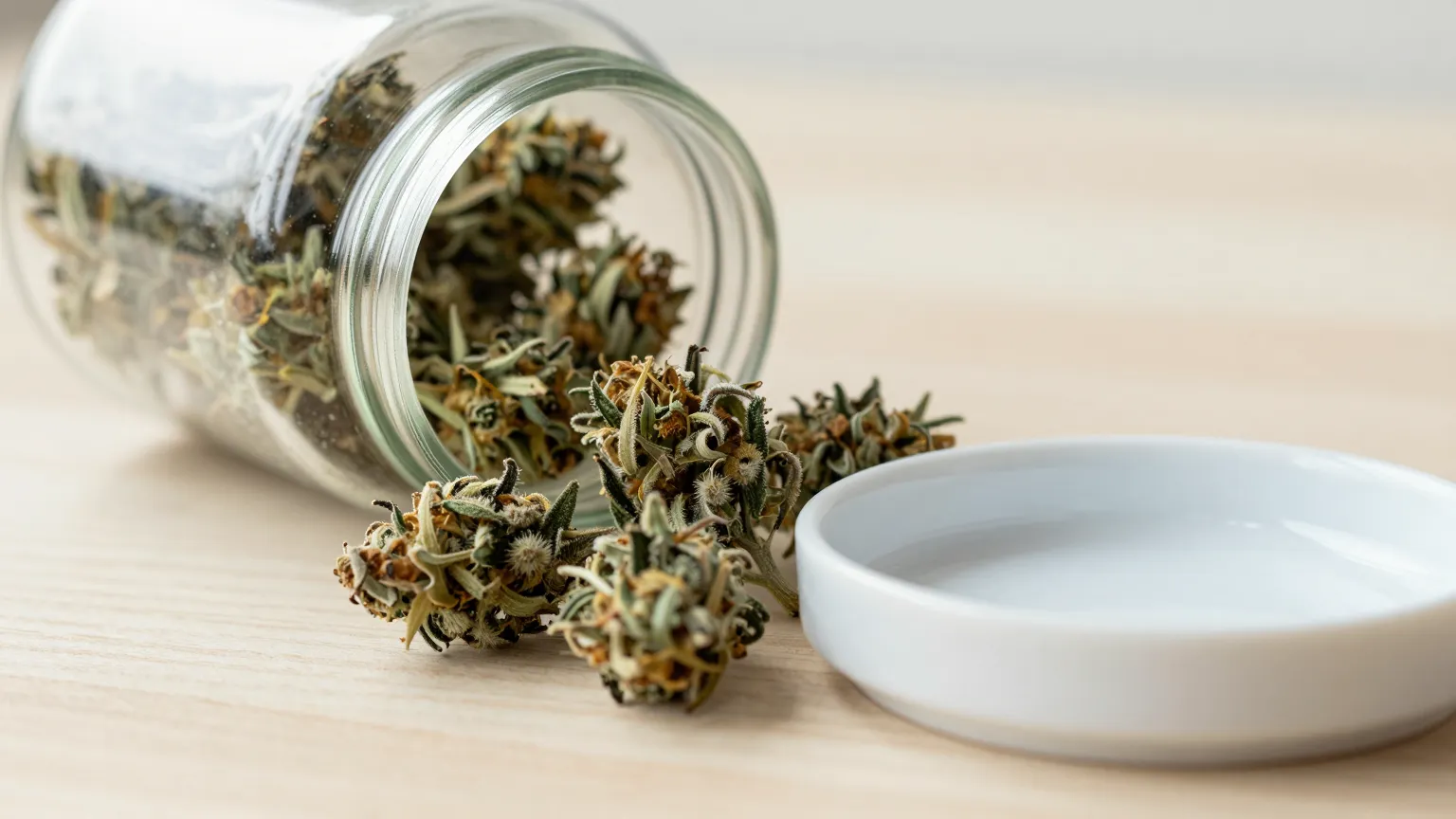
Walk past an open jar on a dispensary counter and the smell arrives before you do. Cannabis is one of the most aromatic plants people keep in the house, strong enough to fill a room from a sealed bag that got opened for three seconds. That intensity is not an accident and it is not one single compound. It comes from two separate families of chemicals doing very different jobs, packed into a plant that evolved to make a lot of both.
Here is what is actually producing the smell, why some jars punch harder than others, and what your nose can and cannot tell you when you are standing at a counter deciding what to buy.
The smell lives on the outside of the flower
Almost everything you smell is made in the trichomes, the frosty resin glands that coat a cured bud. They look like tiny mushrooms under magnification, and the bulb at the top is a chemical factory. It produces cannabinoids like THC and CBD, and alongside them it produces the volatile aroma compounds that give the plant its scent.
Volatile is the key word. These molecules evaporate at room temperature, which is exactly why you can smell them at all. A dried flower is constantly shedding aroma into the air around it, and anything that breaks the trichomes open, grinding, squeezing, even rough handling, releases a burst of it at once. That is why a bud smells mild in the jar and dramatically stronger the moment it hits a grinder.
Because the aroma compounds and the cannabinoids are made in the same place, a heavily resinous flower tends to be a loud one. That correlation is real but it is loose, and it is not a substitute for reading the label.
Terpenes make the citrus, pine and pepper
Terpenes are the best known part of cannabis aroma, and they are not unique to cannabis at all. The same molecules show up across the plant kingdom, which is why the vocabulary for describing weed borrows so heavily from the produce aisle.
Limonene is the compound behind citrus peel and shows up in lemons and oranges. Pinene smells like a conifer forest and is a major component of pine resin. Myrcene, one of the most common terpenes in commercial cannabis, carries an earthy, slightly fruity note also found in hops and mango. Caryophyllene brings black pepper. Linalool brings lavender.
Cannabis is unusual not because it invented these molecules but because it produces so many of them, in such high concentrations, in one place. A single flower can carry dozens of terpenes at once, and the ratio between them is what makes one jar smell like grapefruit and another like diesel and dirt. If you want the longer version, we cover the topic in what terpenes are, and individual compounds get their own pages, such as myrcene.
What terpenes do not fully explain is the smell most people actually mean when they say weed is pungent.
The skunk comes from sulfur, not terpenes
For a long time the skunk note was blamed on myrcene or on some unnamed terpene blend. Chemistry says otherwise. Analytical work published in recent years identified a family of volatile sulfur compounds in cannabis, structurally similar to the thiols found in skunk spray, garlic and, oddly enough, hops used in brewing.
These compounds appear in tiny quantities relative to terpenes, sometimes fractions of a percent of the aroma profile. It does not matter. The human nose detects sulfur compounds at concentrations orders of magnitude lower than it detects most terpenes, which is the same reason a small gas leak is instantly obvious. A trace amount of the right thiol will dominate everything else in the jar.
This is the practical explanation for something shoppers notice constantly: two jars with similar terpene percentages on the label can smell completely different in the room. The label is reporting the compounds the lab tests for, and volatile sulfur compounds are usually not among them. Your nose is picking up something the certificate of analysis never mentions.
It also explains why the loudest flower is often the hardest to keep discreet. Sulfur compounds are small, light and eager to escape, and they pass through packaging that holds terpenes fine.
Why the same strain smells different from shop to shop
Aroma is not fixed by genetics alone. The same cutting grown in two rooms can produce noticeably different flower, because terpene and thiol production respond to light, temperature, nutrients, harvest timing and stress.
Then comes the part that shapes the smell even more: drying and curing. Aroma compounds are fragile. Dry the flower too fast or too warm and a large share of them evaporate before the jar is ever sealed. A slow, cool, controlled cure preserves far more of them, which is a real part of why some flower on the shelf smells three dimensional and some smells like hay.
Time works in the same direction. Terpenes and sulfur compounds keep evaporating and oxidizing after packaging, which is why a jar that has sat on a shelf for a year rarely smells like it did on day one. Heat, light and air all accelerate that loss, and it is the main argument for storing flower cool, dark and sealed. Our guide to storing cannabis goes through what actually helps.
Strain names are a weak predictor here for the same reason. Two products sharing a name can come from different plants, grown differently and cured differently, and the aroma is often the first place that difference shows up.
What the smell tells you, and what it does not
Smell is a genuinely useful shopping signal, within limits.
A strong, layered, distinct aroma usually indicates flower that was grown with reasonable care and cured without being rushed. Freshness reads through the nose better than through almost anything else on a menu.
Certain smells are warnings. Ammonia or a sharp sour note can indicate flower that was jarred before it finished drying. A damp, musty, basement smell is worth raising with staff. Hay or fresh cut grass generally means the aroma compounds are largely gone, either from a hot dry or from age.
What smell does not tell you is potency. There is no reliable relationship between how loud a jar is and how much THC it contains. Plenty of intensely aromatic flower tests moderate, and plenty of high testing flower is unremarkable to the nose. Strength belongs on the label, not in the aroma, and reading the label is the more dependable move.
Smell also does not predict how a product will affect you. Aroma tracks the chemistry of the plant, but the reported experience varies enormously between people, and no scent is a promise about anything.
What this means at the counter
A few things follow from all of this.
Ask to smell it if the shop allows it. Many dispensaries keep sniff jars on the counter exactly for this, and a nose check tells you about freshness and cure that a percentage cannot. Policies vary by shop and by state, so ask rather than reaching.
Expect the smell to change once you get home. Opening and closing a container repeatedly vents aroma every time. The flower is not going bad, it is simply losing volatiles.
Do not read the sniff jar as a spec sheet. Use it to judge freshness and to find aromas you personally enjoy, then use the label and the staff for everything about strength and contents.
And remember the practical side. Cannabis smells strong, in a car, in a bag, in an apartment hallway. Rules about odor, open containers and possession vary by state and change frequently, so check what applies where you are and never carry cannabis across state lines.
Weedtip is a directory, so we do not sell anything or take payment. Browse dispensaries near you here, then buy at the shop.