How Do You Store Weed to Keep It Fresh?
Cannabis does not spoil, but light, air, heat and dry conditions quietly strip out the smell and potency you paid for. Here is how to store flower, carts, edibles and concentrates so they last.
Updated August 15, 2026
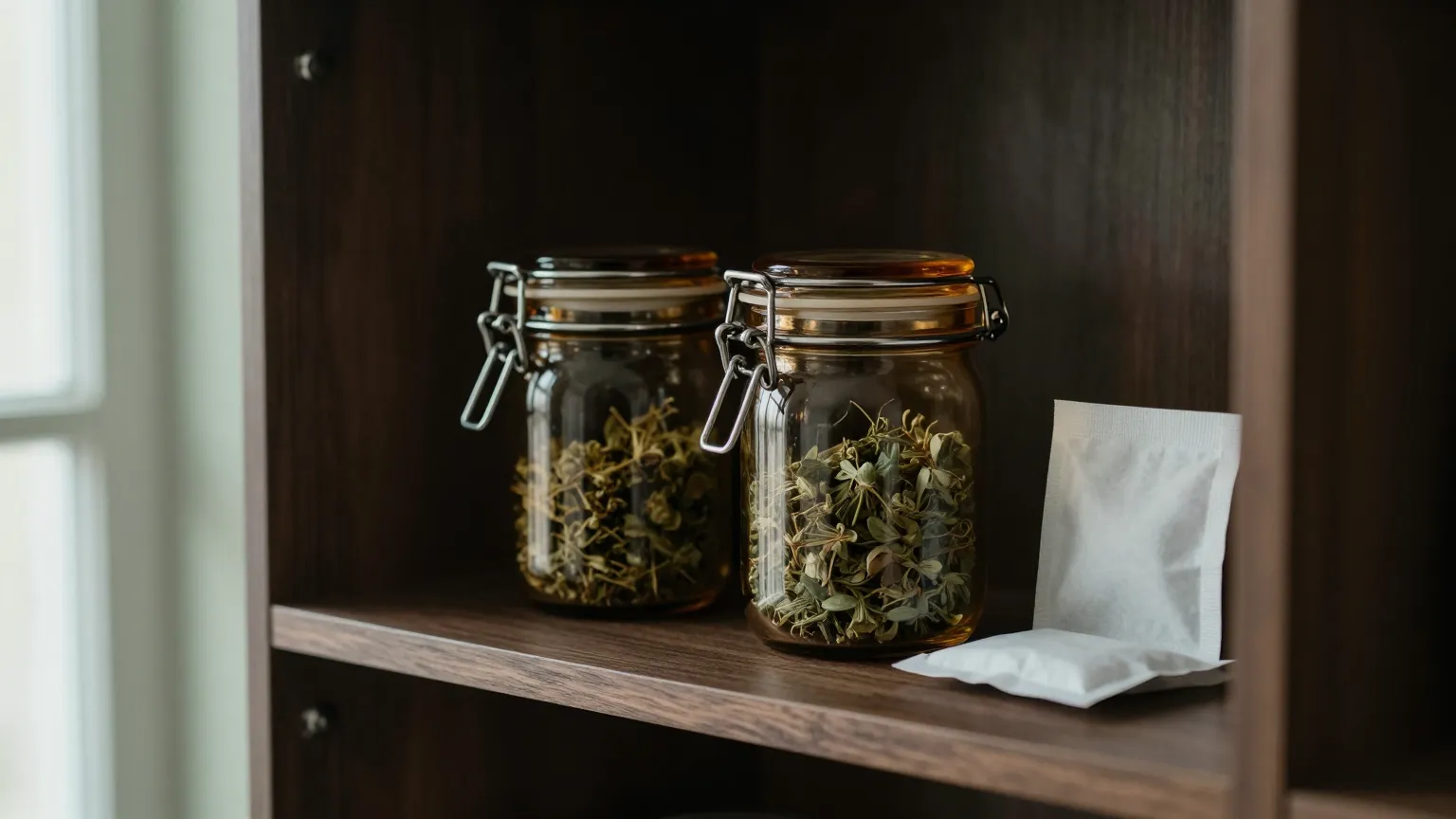
Weed does not spoil, but it does fade
Cannabis flower is an agricultural product. Like coffee beans, dried herbs or loose leaf tea, it does not rot on the shelf so much as it slowly loses the things that made it worth buying. The terpenes that give a jar its smell are volatile compounds, which means they evaporate at room temperature a little more every week. THCA, the acidic compound that converts to THC when you apply heat, degrades over time into CBN, a different cannabinoid with a different reported character. The plant material itself dries out, and dry flower crumbles to dust instead of breaking apart.
None of this happens overnight. Well stored flower can hold up for six months to a year and still be pleasant. Badly stored flower can be noticeably flat in three weeks. The difference is not luck, and it is not about buying more expensive product. It is about controlling four variables, and most of that comes down to what you put the weed in and where you set it down.
If you are still learning how to judge flower in the first place, our guide on how to tell if weed is good quality covers what to look and smell for at the counter. This article picks up after you get home.
The four things that wreck it: light, air, heat, humidity
Light is the fastest way to degrade cannabinoids. Ultraviolet light in particular breaks down THC, which is exactly why dispensaries hand product over in opaque bags and why the good glass jars are amber or black rather than clear. A clear jar on a sunny windowsill is the single worst thing you can do to an eighth.
Air does two jobs, neither of them good. Oxygen drives the chemical breakdown of cannabinoids, and constant airflow carries terpenes away. Every time you open the container you swap the saturated air inside for fresh dry air, which is why the jar you dig into twice a day fades faster than the one you open twice a week.
Heat accelerates everything above. It also dries out plant material and can make trichomes, the resin glands on the surface of the bud, brittle enough to fall off when you handle it. Room temperature or slightly below is the target. A cupboard is fine. A shelf above the stove is not.
Humidity cuts both ways, and this is where people get it wrong. Too dry and the flower turns to powder, burns hot and harsh, and loses aroma. Too damp and you risk mold, which is a real problem and not a cosmetic one. Anything visibly fuzzy, grey or white and web like, or that smells of must, hay or a damp basement, goes in the bin. Do not try to dry it out and salvage it.
Glass jars beat every other container
The default answer for flower is a small airtight glass jar with a gasket seal, ideally tinted. Glass is inert, so it does not react with the resin or hold onto smells between batches, and a proper seal keeps the air inside stable.
What to avoid, and why:
- Plastic sandwich bags. They are permeable, they crush the buds, and static cling pulls trichomes off the flower and onto the plastic. Fine for the ride home from the shop, bad for a month.
- Cheap plastic tubs. Same static problem, plus plastic can pick up odors and, over long periods, interact with resin.
- The dispensary pop top. Better than a bag, since it is opaque and reasonably airtight, and perfectly good for a couple of weeks. The weakness is volume: half an empty container is half a container of air. If you bought an eighth and you are two thirds through it, that headspace is working against you.
- Metal tins and grinders. Grinders are for the amount you are about to use, not for storage. Ground flower has vastly more surface area exposed to air and goes stale in days rather than months.
- The freezer. A popular idea that mostly backfires. Freezing makes trichomes brittle, and any handling snaps them off the bud. Freeze thaw cycles also introduce condensation. Long term freezer storage can work for cultivators with vacuum sealing and no intention of touching the material, but for a jar you plan to open, it is not worth it.
Match the jar to the amount. A two ounce jar holding a quarter of an ounce is a lot of trapped air. Step down to a smaller jar as you work through the supply, or split a large purchase into two jars and only open one.
Humidity packs and the 55 to 62 percent range
Two way humidity packs, the small square sachets sold at almost every dispensary, absorb moisture when the air inside the jar is too damp and release it when the air is too dry. They hold the container at a fixed relative humidity, usually offered at 58 percent or 62 percent.
Broadly, the 55 to 62 percent band is where flower stays springy, keeps its smell and burns evenly. Below roughly 50 percent it starts to feel crispy. Above roughly 65 percent you are moving into territory where mold becomes a genuine risk, especially in dense buds.
Two practical notes. First, do not let the pack sit in direct contact with the flower for months, because the surface touching it can end up damper than the rest. A small piece of parchment or a jar with a lid mounted holder solves it. Second, packs are consumable. When one goes hard and crunchy it is spent and should be replaced. Most last a month or two in a regularly opened jar.
A cheap hygrometer, the kind sold for cigar humidors, takes the guesswork out entirely if you are storing a larger amount.
Carts, edibles, concentrates and pre-rolls each want something different
Flower gets most of the attention, but the rest of the shelf has its own rules.
Vape carts should be stored upright, cap on, at room temperature. Upright keeps oil away from the mouthpiece and helps prevent leaks and clogs. Heat thins the oil and makes leaking more likely, so the car glovebox in summer is the classic way to ruin one. Cold makes the oil viscous and hard to draw. If you want the background on how these work, see what is a vape cart.
Edibles follow the food rule first. Read the package: some want refrigeration, most want a cool dark cupboard, and all of them want to be in the original labeled packaging, sealed, and stored well out of reach of children and pets. This matters more than it does with other formats, because an edible can look like ordinary food to somebody who does not know what it is. Child resistant packaging exists for a reason and is worth keeping.
Concentrates vary by texture. Badder, sauce and rosin are generally happier cold, and many people keep them refrigerated in a silicone or glass container to hold their consistency. Shatter is more stable at room temperature. Either way, keep them out of light and away from heat.
Pre-rolls are already exposed to a lot of air through the paper, so they have the shortest window. An airtight tube or the jar with the rest of your flower will buy time, but they are best treated as something to use within a few weeks.
Where to actually put it
A closed drawer, a cupboard, or a closet shelf in the coolest interior room of the home. That is genuinely most of the answer. Dark, stable temperature, out of the way, and out of reach of anyone under 21 or any guest who might open the wrong cabinet. A lockable box is a reasonable step if there are children in the house.
Places to avoid: the windowsill, the top of the refrigerator, a bathroom that runs steamy, anywhere near a radiator or oven, and the car. The car is worth its own mention, because a hot vehicle in summer will cook flower and warp cart hardware in an afternoon, and because rules on transporting cannabis vary widely by state and are usually specific about sealed containers and where in the vehicle they may be. Laws change and differ from one jurisdiction to the next, so check your own state's current rules, and never carry cannabis across state lines.
A quick checklist
- Airtight glass jar, tinted or kept in the dark
- Jar sized close to the amount you actually have
- A two way humidity pack, replaced when it hardens
- Cool, dark, stable spot, away from heat sources and windows
- Grind only what you are about to use
- Carts upright, edibles sealed in their labeled packaging and secured
- Open the jar as briefly and as rarely as you can
Buying smaller amounts more often is the other half of the answer, and it is the reason many regulars keep a shop they like nearby rather than stockpiling. If you are looking for one, browse dispensaries by location, and if you want to understand why two jars from the same shop can smell nothing alike, the terpene guides explain what those aromas are made of. Weedtip is a directory: you browse here and buy at the shop.