How Can You Tell If Weed Is Good Quality?
A strain name and a THC number will not tell you whether a jar is any good. Here is how to judge cannabis flower by smell, look, texture and burn, in about thirty seconds at the counter.
Updated August 13, 2026 7 min read
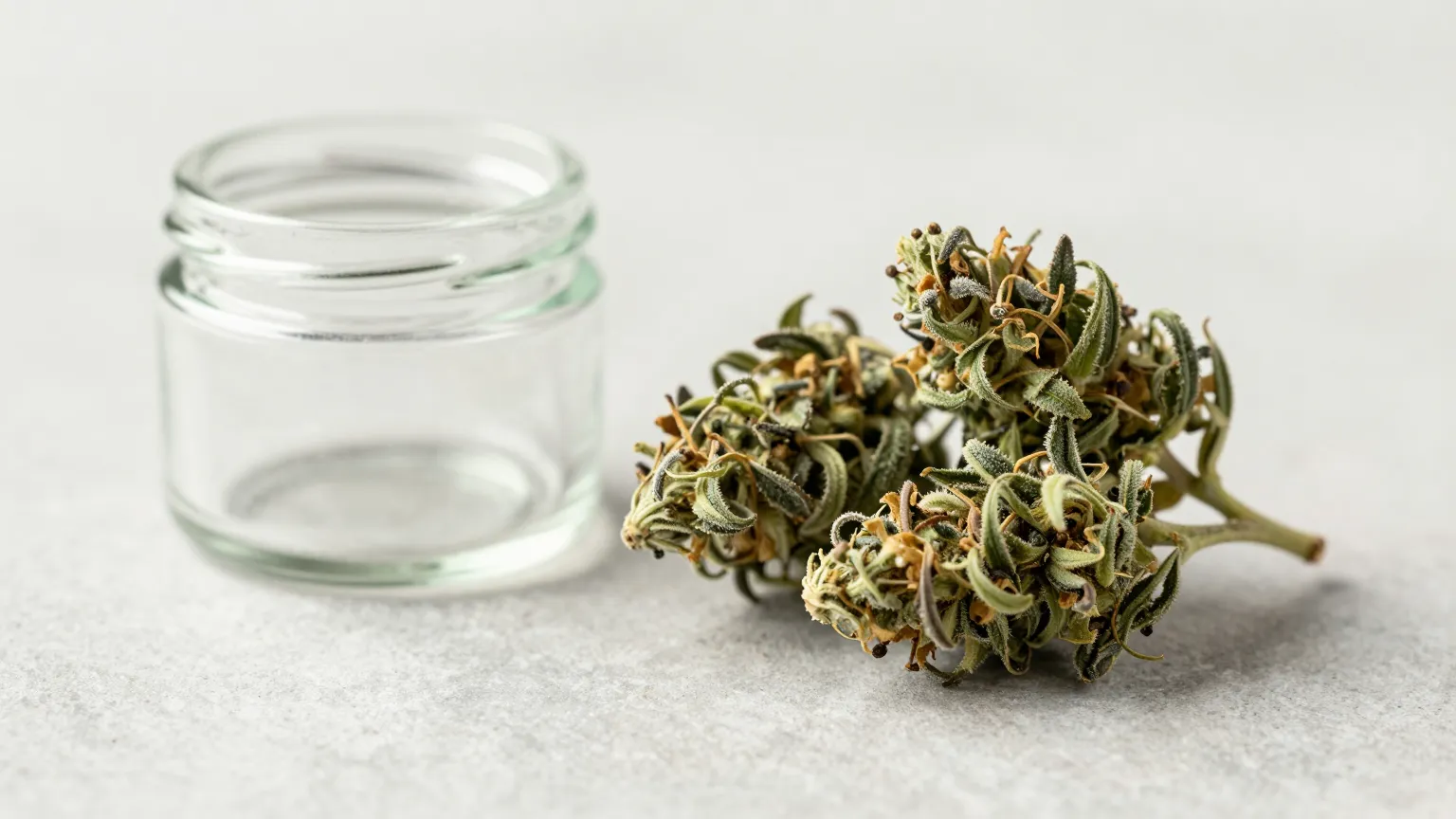
Every dispensary menu tells you a strain name, a THC number and a price. None of those three things reliably tell you whether the flower in the jar is any good. Two harvests of the same strain from the same farm can land in very different places, and a big number on the label does not rescue a badly grown or badly stored batch.
The good news is that judging flower is mostly a matter of using your nose, your eyes and your fingers, and it takes about thirty seconds once you know what you are looking at. Here is what experienced buyers actually check.
What "good quality" means for cannabis flower
Quality in cannabis is not one thing. It is really four things stacked on top of each other: how the plant was grown, when it was harvested, how carefully it was trimmed and dried, and how it has been stored since. A grower can do everything right and still ship a mediocre jar if it sat under hot lights in a display case for two months.
That is why quality is best judged at the level of the specific jar rather than the brand or the strain. Brands are a useful shortcut, and a shop that moves a lot of product tends to have fresher inventory, but the jar is the unit that matters. Freshness is doing a lot of the work here. Cannabis is an agricultural product with a shelf life, not a shelf stable one.
It is also worth separating quality from potency. A high test number tells you about one compound in one sample from one batch. It says nothing about aroma, cure or smoothness, which is why plenty of shoppers who chase the highest percentage on the menu end up disappointed. Our guide to what THC percentage actually measures goes deeper on that gap.
Smell tells you more than anything else
Aroma is the single best signal available to a shopper, and it is the first thing budtenders themselves reach for. Good flower smells like something specific and loud: citrus peel, pine, diesel, gas, berry, pepper, cut grass, sour fruit. What you are smelling are the plant's aromatic compounds, which vary by cultivar and by how the batch was handled.
What you want is intensity and clarity. Open the jar or the sniff jar and the smell should arrive immediately and be easy to describe. Weak, flat or generically green flower is usually old, poorly cured or grown without much care.
More important is what you do not want to smell. Anything hay like, musty, damp basement, ammonia or wet cardboard is a problem. Hay usually means the flower was dried too fast or too hot. Ammonia can point to moisture trapped in the jar. Musty or mildew smells are a reason to hand the jar straight back and ask for a different one.
Many shops keep sniff jars on the counter for exactly this reason. If a shop has them, use them. If it does not, you can still ask the budtender which batches came in most recently, which is a fair question and one they answer all day.
What good flower looks like
Once the smell checks out, look at the structure of the buds. Well grown flower has a defined shape rather than being loose and airy, though density varies by genetics. Some perfectly good cultivars grow fluffy by nature, so density on its own is not a verdict.
Look for a visible frost of trichomes, the tiny resin glands that coat the surface and catch the light. Under a phone flashlight they should look like a fine sugar. Sparse, dull surfaces suggest either an early harvest or a lot of handling between the farm and the jar.
Trim quality is visible too. Neatly trimmed flower has had the excess leaf removed without shaving the bud down to nothing. Lots of leftover leaf usually points to a rushed job, and machine trimmed flower can look rounded and slightly beaten up.
Color is worth a glance. Healthy flower runs from deep green through purple depending on genetics, with orange or rust colored hairs. Uniform brown, yellow or bleached looking flower is a flag. So are any grey, white or fuzzy patches, which are not the same thing as trichomes and are a hard no.
Finally, look at how much loose material sits at the bottom of the container. A little is normal. A lot means the flower is dry or has been handled roughly, and it is well on its way to becoming shake.
Texture and cure: the squeeze test
If the shop lets you handle the flower, gently press a bud between two fingers. It should give a little and then spring most of the way back. That slight sponginess is the sign of a proper cure, the slow controlled drying process that follows harvest.
Two failure modes to feel for. Flower that crumbles to dust at the lightest touch is too dry, which means the aromatic compounds have largely evaporated and the smoke will be harsh. Flower that feels damp, spongy or cold, or that will not break apart at all, is too wet, and moisture in a sealed jar is how mold starts.
You can hear cure quality too. A well cured bud makes a small snap when you break the stem, rather than bending like a green twig or shattering into powder.
Cure is the stage where a lot of otherwise good cannabis gets ruined, because it is slow and takes up space and every day of curing is a day the grower is not selling. It is also the stage that most affects how the flower actually smokes, which is why a modest batch that was cured properly often beats a flashier one that was not. If you want a longer look at how growing conditions shape the finished jar, see our comparison of indoor and outdoor cannabis.
What the label can and cannot tell you
Every regulated jar carries a compliance label, and it is worth two seconds of your attention. The two most useful fields are usually the harvest or packaged date and the batch or lot number. Anything more than several months past its packaged date has probably lost aroma even if it is still perfectly fine to buy.
The full lab panel, sometimes published as a certificate of analysis, reports cannabinoid content and the results of safety testing for things like pesticides, solvents, heavy metals and microbials. Testing requirements are set state by state and they change, so what appears on a label in one state may not appear in another.
What the label cannot tell you is how the flower smells, how it was cured, or how it will burn. Those are the parts you have to judge yourself. Our walkthrough of how to read a cannabis label covers the rest of the fields.
The burn test at home
The last checks happen after you leave. Break a bud apart by hand. It should come apart in defined pieces with a little resistance and leave a slight stickiness on your fingers.
When it burns, well grown and well flushed flower produces a light grey ash. Dark, black or chunky ash that will not fall away cleanly often points to leftover nutrients or incomplete drying. The smoke from a good jar tends to be smoother, and the flavor should resemble what you smelled in the shop.
If a jar disappoints, it is worth noting the brand, the batch and the shop. Cannabis quality is inconsistent enough that the useful skill is not finding one perfect product, it is learning which growers and which shops are reliably careful.
A thirty second checklist
Before you commit to a jar, run through this:
- Does it smell loud and specific, with no hay, ammonia or must?
- Is there visible trichome frost, and no grey or fuzzy patches?
- Is the trim clean, without heavy leftover leaf?
- Does a bud give slightly and spring back, rather than crumbling or feeling damp?
- Is the packaged or harvest date recent?
- Is there only a little loose material at the bottom?
None of this requires expertise, and budtenders are generally happy to talk through it. You can compare shops near you on Weedtip's dispensary directory, then judge the jar once you are standing at the counter. Cannabis products are for adults 21 and over, or for qualifying patients under a state medical program, and the rules for both vary by state and change over time.