What Is a Landrace Strain? Landrace Cannabis Explained
A landrace is a traditional cannabis population that adapted to one region over many generations, like the Hindu Kush or Thailand. Here is what the word means, why landraces matter, and how to read the label at a dispensary.
Updated September 19, 2026
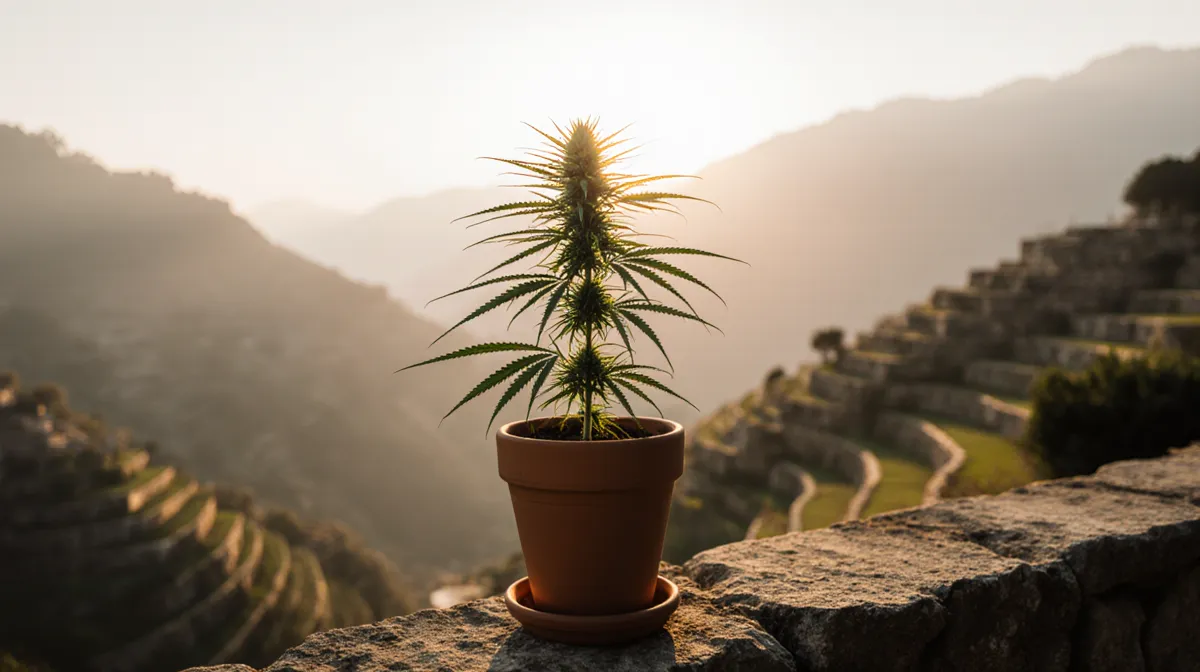
If you spend any time reading strain descriptions, you will eventually run into the word "landrace." A budtender might call a jar a "classic landrace sativa," or a menu might list something as "heirloom Thai genetics." It sounds important, and it is, but it also gets used loosely. Here is what the term actually means, where these plants came from, and how to read the label when you see it at a shop.
What "landrace" means
A landrace is a population of cannabis that grew in one region for a very long time, usually generations of farmers saving seeds from their own fields, until it adapted to that specific place. The local climate, altitude, daylight hours, soil and pests all shaped it. So did the people growing it, who kept seeds from the plants they liked best for their own purposes, whether that was hashish, smoking flower or fiber.
The key idea is that a landrace was shaped by a place and a long stretch of time, not by a modern breeder crossing two named strains to hit a target. That is why landraces are usually named after where they came from rather than given a brand-style name. Think Hindu Kush, Afghan, Thai, Durban, Acapulco Gold or Panama Red.
The word itself is borrowed from agriculture in general. Farmers and seed banks talk about landrace wheat, landrace corn and landrace tomatoes in exactly the same way: a traditional local variety that adapted to its home over many seasons.
Where landrace strains come from
Cannabis spread across the world over thousands of years, and the plant settled into very different environments along the way. A few regions come up again and again in the history of modern strains:
- The Hindu Kush mountains along the border of Afghanistan and Pakistan. Plants from this area tend to be short, bushy and resinous, and were traditionally grown for hashish. They are the backbone of most of what shoppers now call "indica."
- Southeast Asia, especially Thailand. These plants are tall, airy and slow to flower, adapted to long, hot growing seasons near the equator.
- Mexico, Colombia and Central America, the source of names like Acapulco Gold, Panama Red and Colombian Gold that were well known in the United States in the 1960s and 1970s.
- Jamaica, home of Lamb's Bread and a long local growing tradition.
- Africa, including South Africa's Durban region and plants from countries such as Malawi and Swaziland.
Because each region pushed the plant in a different direction, landraces from different places can look almost like different species. That visible difference is a big part of how the words indica and sativa came to be used the way they are today. If you want the longer story on that split, see our explainer on indica vs sativa.
Why landraces matter
Nearly every strain on a dispensary menu today traces back to landraces. In the 1970s and 1980s, travelers and early breeders collected seeds from places like Afghanistan, Thailand, Mexico and Colombia and brought them home. Breeders then crossed those plants to combine traits: the fast flowering and dense buds of the mountain plants with the aromas and structure of the equatorial ones.
Those crosses became the first famous hybrids, and those hybrids were crossed again and again. Go back far enough in the family tree of almost any modern strain and you will find a handful of landraces at the roots. In that sense, landraces are the raw material the whole modern market was built from.
They also matter for the future. A landrace population usually holds a lot of genetic variety, far more than a heavily inbred commercial strain. Breeders value that variety as a source of new traits, from unusual aromas to resistance to mold or pests. Some growers and seed collectors work to preserve landrace lines for exactly that reason, since many of the original growing regions have since switched to planting modern hybrids.
Is the "landrace" at your dispensary really a landrace?
This is where the label gets slippery. Strictly speaking, a true landrace is a plant growing in its native region, in the population that adapted there. Once seeds leave that place and are grown indoors under lights in another country, generation after generation, the plant starts adapting to its new conditions and to whatever the grower selects for.
So most "landrace" products you see in a legal market are better described as landrace descendants. You will also see a few related terms:
- Heirloom usually means a line that was collected from a native region and kept going with minimal crossing, often outside its home.
- IBL, short for inbred line, means a strain that has been bred to itself for many generations so it grows out consistently. Some IBLs started from landraces.
- Landrace-dominant or landrace-derived usually means a cross where one or both parents have landrace heritage.
None of these terms is regulated, so their use varies from brand to brand. A strain name on its own is not proof of anything either. Two shops selling "Durban Poison" can carry quite different plants. Our guide to whether strain names mean anything goes deeper on why.
Being a descendant is not a bad thing. It just means the word "landrace" is describing heritage, not a guarantee that the plant in the jar matches what grew on a hillside decades ago.
Well known landrace names you might see
You will not find every one of these at every shop, and availability depends on your state and local growers, but these names show up often on menus and in strain databases:
- Hindu Kush and Afghan: mountain plants known for heavy resin and a hashy, earthy aroma. You can look up how shops describe Hindu Kush in our strain pages.
- Durban Poison: a South African line usually sold as a sativa, often described with sweet, anise-like or piney aromas.
- Acapulco Gold: a Mexican name famous since the 1960s, typically associated with golden colored buds.
- Thai: a slow flowering equatorial type, historically associated with "Thai stick."
- Lamb's Bread: a Jamaican line often linked to the island's music culture.
- Panama Red and Colombian Gold: Central and South American names that were common in the United States before modern hybrids took over.
Effects descriptions for these strains are reported impressions, not guarantees. How any cannabis feels depends on the individual plant's chemistry, the product type and the person using it. The certificate of analysis or product label lists what was actually measured, including cannabinoid content and sometimes terpenes, and that tells you more than a strain name does.
How to shop for landrace genetics
If you are curious to try something with landrace heritage, a few practical tips help:
1. Ask the budtender where the genetics came from. A good shop can often tell you whether a product is from a heirloom line, an IBL or a modern cross that simply borrowed a classic name.
2. Read the label, not just the name. Cannabinoid percentages and any listed terpenes are measured values. The strain name is marketing plus history.
3. Expect different growth traits. Equatorial types in particular are harder to grow indoors because they flower slowly and grow tall, so they are less common on menus and may cost more.
4. Check the rules where you are. Cannabis laws, purchase limits and product rules vary by state and change over time. Adults 21 and over, or registered patients where a state medical program applies, should confirm what their state allows before buying.
You can browse strains by name on the Weedtip strains hub and then check which dispensaries near you carry them. Weedtip is a directory, so you compare shops here and buy at the dispensary itself.
The short version
A landrace is a traditional cannabis population that adapted to one region over a long stretch of time, like the mountain plants of the Hindu Kush or the tall equatorial plants of Thailand. Those plants are the ancestors of almost every modern strain. What most shops sell as "landrace" today is usually a descendant or heirloom line rather than a plant grown in its native home, so treat the word as a description of heritage, and lean on the label and your budtender for the details that matter.