What Is Shake? Cannabis Shake, Trim and Smalls Explained
Shake is the loose, broken-up flower that collects at the bottom of the jar, and it is often the cheapest flower in the shop. Here is how it differs from trim and smalls, what you give up, and how to tell a good jar from a bad one.
Updated August 13, 2026 8 min read
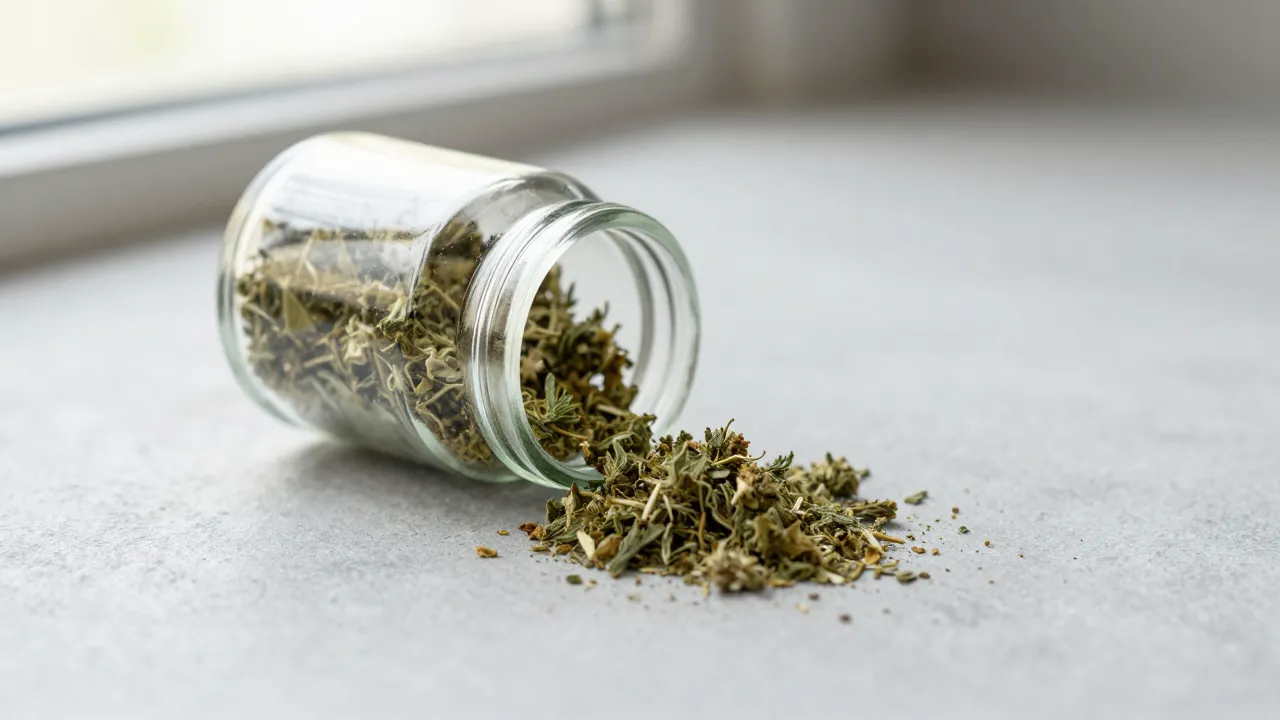
Scroll far enough down a dispensary flower menu and the prices stop making sense. Eighths at $45, eighths at $30, then something called shake at $60 an ounce. It looks like a mistake, or like a trap. It is neither. Shake is a real product category with a real place on the shelf, and knowing what it is turns the cheapest line on the menu from a gamble into a reasonable choice, or tells you to walk past it.
Here is what shake is, what it is not, and how to judge a jar of it.
What shake actually is
Shake is the loose plant material that collects at the bottom of a container of cannabis flower. Dried buds are handled several times between harvest and sale: they get trimmed, cured, moved between bins, weighed, and jarred. Every time they move, small fragments break off. Those fragments settle at the bottom, and that accumulation is shake.
The name is literal. Shake a large jar of flower and what falls off is shake.
The important part is that shake is flower. It is the same plant, from the same harvest, often from the same batches sitting in jars on the same shelf. It has not been treated with anything, extracted, or reprocessed. It is simply flower that has come apart into smaller pieces, which is why it sells for less than intact buds even when the material itself is comparable.
That is also why shake behaves the way flower behaves. It grinds, it packs, it burns. Nothing about the format changes what it fundamentally is.
Shake, trim, smalls and popcorn buds are not the same thing
These four words get used loosely, sometimes by shops themselves, and the differences matter to what you are actually paying for.
Shake is broken-up bud: small fragments, loose leaf material from the bud itself, and a fair amount of dust at the bottom of the bag.
Trim is what gets cut away from the bud during trimming. It is mostly sugar leaf, the small leaves that grow tight against the flower and carry some resin, plus stem and larger fan leaf if the trim was sloppy. Trim is not bud. It is the offcuts, and it is generally weaker and harsher than shake. Most trim goes to extraction rather than the retail shelf, but some markets do sell it, sometimes labeled as shake, which is the single most common way shoppers get disappointed.
Smalls are whole, intact buds that are simply small. They were sorted out by size rather than broken. Nothing is wrong with them beyond not photographing well, and smalls are often the best value on a flower menu.
Popcorn buds are the same idea as smalls, named for their size and shape. Some shops use the two terms interchangeably.
So the value ladder, roughly, runs: trim at the bottom, then shake, then smalls and popcorn, then standard buds, then top-shelf selections. A jar labeled shake that is actually mostly leaf and stem is trim wearing a better name. Being able to spot the difference is most of the skill here.
Where shake shows up on a dispensary menu
Shake tends to appear in three places.
The first is as bulk flower, sold by the gram, the eighth, the half ounce, or most commonly the ounce, in a plain container. If you are not sure how those weights compare, our guide to what an eighth of weed is lays out the full ladder.
The second is inside pre-rolls. A meaningful share of pre-rolled joints on the market are filled with shake or with a blend of shake and ground buds, because shake is already close to the right consistency and because it is cheaper to source. This is not automatically bad, and plenty of good pre-rolls are made this way, but it does explain the price gap between a $6 pre-roll and a $18 one. Our pre-rolls guide covers how to read that difference.
The third is in infused or blended products where the flower is going to be ground anyway, and where intact bud structure would be wasted.
Some producers now market shake under nicer names: "ground flower," "milled flower," "joint mix," or a house brand name with no mention of shake at all. Read the label and the weight, not the name.
What you give up, and what you do not
The honest tradeoffs.
Potency is usually a little lower, and less consistent. The resin glands that carry most of the cannabinoids sit on the surface of the flower, and they are fragile. Shake has been knocked around, so some of that material has already fallen off as kief, and some has degraded through extra handling and exposure. Lab numbers on a shake batch also come from a mixed pile rather than one uniform product, so what you get in the jar can vary more than a single strain of intact buds would. The label still tells you what the tested batch came in at, and the potency panel is worth reading rather than guessing from appearance.
Aroma fades faster. Terpenes, the aromatic compounds that give each cultivar its smell, are volatile and evaporate over time. More broken surface area means more evaporation. Shake that has sat around often smells like generic hay rather than like anything in particular.
Strain identity gets fuzzy. Some shake is single strain, collected from one batch. A lot of it is a mix of whatever was in the room that week, and it may be sold as an unnamed blend for exactly that reason. If the distinction between cultivars matters to you, a mixed jar is not the place to explore it.
It is drier and dustier. Expect more fine powder, occasional small stems, and material that lights fast and burns hot.
What you do not give up: the per-gram price. Shake is frequently the cheapest legal flower in the store, sometimes by half or more. If your use case is joints, and you were going to grind everything anyway, the intact bud structure you are paying extra for at the top of the menu is structure you were about to destroy.
How to judge a jar of shake
Look at it before you commit, and if the display jar is available, ask to see it.
Look for color and composition. Good shake reads mostly green with visible bud fragments and trichome frost. Bad shake reads pale, brown, or leafy, with obvious flat leaf shapes and stem pieces you could pick out with your fingers. Stems are dead weight you paid for by the gram.
Check the amount of dust. Some fine powder at the bottom is normal, and that powder is largely kief, which is the good part. A jar that is mostly powder and stem is a different story.
Smell it if the shop allows it. Any distinct aroma at all, sweet, citrusy, piney, gassy, herbal, is a sign the material has been stored decently and has not been sitting in a warm room for a year.
Check the packaged date on the label, not just the test date. Shake ages faster than whole buds because of that extra surface area, so a recent date matters more here than it does elsewhere on the menu. Once you get it home, the same rules apply as for any flower, and probably more strictly: our notes on storing cannabis cover keeping it from drying out further.
What to ask at the counter
Budtenders know which shake in the case is worth it, because they hear the complaints. Useful questions:
Is this shake or is it trim? Is it single strain or a blend? Which batch or which strains did it come from? When was it packaged? Do you smoke it?
That last one gets you a straighter answer than the rest combined.
Product availability, naming and pricing all vary by shop and by state, and rules for how cannabis has to be labeled and sold differ from one state to the next and change over time, so treat what is on the shelf near you as the authority. Weedtip is a directory: you can browse flower and other product types here and see what shops nearby are stocking, then buy at the shop itself.
So is shake worth buying?
It depends entirely on what you were going to do with it.
If you roll joints, smoke often, and care more about cost per gram than about strain nuance, decent shake is one of the best values in a legal store, and passing it up because it looks unglamorous is leaving money on the table.
If you want a specific cultivar, care about aroma, prefer a pipe or a dry herb vaporizer where bud structure is part of the experience, or you are buying for a particular occasion, spend the extra few dollars on smalls instead. Smalls give you most of the savings without any of the mystery.
And if the jar in front of you is pale, leafy, stemmy and smells like nothing, that is not shake being cheap. That is trim being oversold, and no price makes it worth it.
Cannabis products are for adults 21 and over, or for qualifying patients under a state medical program.