What Are Trichomes on Weed?
Trichomes are the tiny resin glands that make weed look frosty, and they hold nearly all of the cannabinoids and terpenes in the plant. Here is what they are, how growers read them, and what they tell you about a jar on the shelf.
Updated September 3, 2026
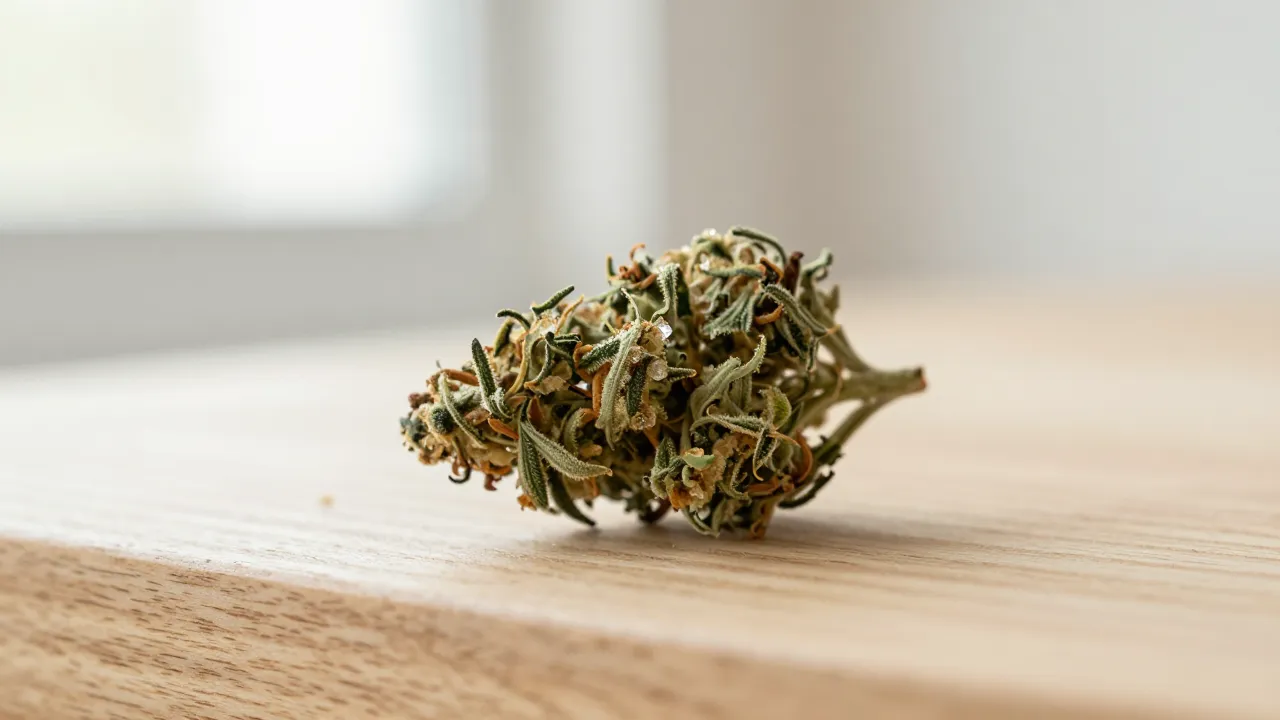
Hold a well grown cannabis bud up to a window and it does not look smooth. It looks frosted, almost sugared, and if you get a jeweler's loupe or your phone's macro lens on it the frost resolves into thousands of tiny translucent stalks with round heads on top, packed together like a field of miniature mushrooms.
Those are trichomes. They are the single most useful thing to understand about how cannabis is grown, priced and sold, because almost everything a shopper is actually paying for is made and stored inside them.
What a trichome actually is
The word comes from the Greek for growth of hair, and versions of these structures appear all over the plant kingdom. Stinging nettles use them as defense. Mint, basil and lavender use them to hold aromatic oil. Cannabis uses them for both jobs at once.
A cannabis trichome is a small resin factory. The plant builds the stalk, then the gland head on top produces and holds a sticky, bitter, strong smelling resin. That resin is unappealing to insects and grazing animals, and it appears to give the flower some protection from ultraviolet light and drying wind. Plants under stress tend to make more of it, which is part of why growers pay such close attention to light, temperature and humidity in the final weeks.
Here is the part that matters at the counter. The cannabinoids, THC and CBD and the rest, along with the terpenes that give one jar a lemon smell and another a diesel one, are produced and stored almost entirely in those resin heads. Not in the leaf. Not in the stem. The green plant material is structure and plumbing. The trichomes are the cargo.
The three types you will hear named
Growers and lab reports sometimes distinguish three kinds, and the differences are worth a minute because they explain why some plant material is worth far more than the rest.
Bulbous trichomes are the smallest, just a few cells, scattered across most of the plant's surface. They are essentially invisible without magnification and contribute very little.
Capitate sessile trichomes are larger, with a visible gland head sitting flat against the surface with no real stalk. They show up in numbers on leaves and bracts.
Capitate stalked trichomes are the ones that matter commercially. They have a clear stalk and a bulging head, they are large enough to see with a cheap loupe, and they carry the great majority of the resin. They cluster most densely on the bracts of the flower itself and on the small sugar leaves tucked into the bud, which is exactly why flower costs more than trim and why trim still has value rather than being thrown away.
Why the number on your label lives here
When a lab reports a THC percentage, it is reporting a property of the whole sample by weight, but the compound it is measuring came from the trichome heads. A bud that grew a dense, intact coat of capitate stalked trichomes tests higher than an equally healthy bud that did not, all else being equal.
This is also why the number moves around for reasons that have nothing to do with plant genetics. Trichome heads are fragile. They break off during handling, transport and packaging, and every head that ends up as dust in the bottom of the jar is potency that left the flower. Two containers of the same harvest can test differently depending on how gently they were treated. That is one of several reasons it is worth reading the full lab panel on a cannabis label rather than shopping on the headline percentage alone.
Testing requirements, panel formats and what a label must disclose vary from state to state and change over time, so treat the specifics on the jar in front of you as the authority rather than a rule you read somewhere.
Clear, cloudy, amber: how growers read them
Trichome heads change appearance as the plant matures, and this is the main visual cue growers use to decide when to cut. Early on the heads look glassy and clear. As they fill out they turn cloudy or milky. Later still, some shift to a warm amber color as the resin oxidizes.
Most growers describe harvesting somewhere in the mostly cloudy window, with a scattering of amber, and there is a long running belief in cultivation circles that pushing later toward amber produces a heavier, more sedating result while cutting earlier produces a brighter one. It is worth being honest that this is grower lore built on decades of observation rather than settled science. The relationship between harvest timing, cannabinoid content and how a particular batch actually feels is more complicated than a color chart, and individual response varies a great deal from person to person.
What is not in dispute is that harvest window changes the chemistry of what ends up in the jar, which is one more reason two batches of the same named strain can be noticeably different products.
What frosty actually tells you at the counter
If a budtender hands you a jar to look at, trichomes are the most informative thing in it.
Good flower reads as frosted rather than merely green, with visible sparkle when it catches the light. Under a loupe you want to see gland heads still sitting on their stalks, intact and round, rather than a field of bare broken stems.
A thick layer of loose powder at the bottom of the container is a mixed signal. Some settling is normal and that powder is kief, which is nothing more than trichome heads that have come free. A lot of it usually means the flower was handled roughly or has dried out to the point of brittleness, and it means some of what you are buying is no longer attached to the bud.
Smell is the other trichome signal, because terpenes live in the same gland heads. Flower that smells like almost nothing through an open jar has usually either lost its volatile compounds to age and heat or never developed many. That does not make it unusable, but it is a fair thing to weigh against the price. There is more on reading a jar in our guide to telling whether weed is good quality.
Nearly every concentrate is just trichomes, collected
Once you know what a trichome is, the concentrate case in a dispensary stops looking like a wall of unrelated products and starts looking like one idea executed several ways. Every one of them is an attempt to separate resin heads from plant material and keep as much of the original chemistry as possible.
Kief is the simplest version: heads knocked loose by a screen or a grinder chamber and collected as powder. Traditional hash is kief that has been pressed with heat and pressure until it forms a pliable block. Ice water hash uses cold water and agitation to break the heads off and a stack of fine screens to sort them by size. Rosin skips solvents entirely and squeezes resin out with heat and pressure.
Solvent based products such as shatter, wax and live resin use a solvent to dissolve the resin, then purge it off. Live resin gets its name from starting with fresh frozen plant material rather than dried and cured flower, on the theory that freezing preserves volatile terpenes that would otherwise evaporate during drying.
Different methods, same underlying goal. This is also why concentrates are so much stronger by weight than flower. They are the payload with most of the packaging removed, which is why they are sold and consumed in much smaller amounts.
How to keep the trichomes you paid for
Because gland heads are fragile and their contents are volatile, most of what preserves cannabis quality at home comes down to protecting them.
Handle flower gently and as little as possible. Every squeeze, shake and transfer between containers knocks heads loose. Break buds apart with your fingers or a grinder right before use rather than prepping a week ahead.
Keep it cool, dark and reasonably airtight. Heat drives off terpenes, light degrades cannabinoids over time, and oxygen accelerates both. A sealed glass jar in a cupboard beats a plastic bag on a sunny windowsill by a wide margin.
Do not let it get bone dry. Overly dry flower goes brittle and sheds trichomes at a touch. Most people find flower stays in reasonable condition for a matter of months rather than weeks under decent storage, though it will keep drifting in smell and character the whole time.
And if a layer of kief does build up in the bottom of your grinder, that is not waste. It is the most resin dense material you own.
Trichomes are the resin glands on the surface of a cannabis flower, and they hold nearly all of the cannabinoids and terpenes in the plant. They explain why flower is priced above trim, why the percentage on a label can shift with nothing but rough handling, why concentrates exist at all, and why storage advice is as fussy as it is.
Cannabis products are for adults 21 and over, or for patients enrolled in a state medical program where one exists. If you want to see what is actually stocked near you, start with the Weedtip product directory and browse licensed shops from there. Weedtip is a directory, so you browse here and buy at the shop.