What Is a Cannabis Consumption Lounge?
A cannabis consumption lounge is a licensed venue where adults 21 and over can legally use cannabis on site. Here is how the two main models work, what a visit costs and looks like, and why the map of open lounges is still so thin.
Updated September 23, 2026
The short answer
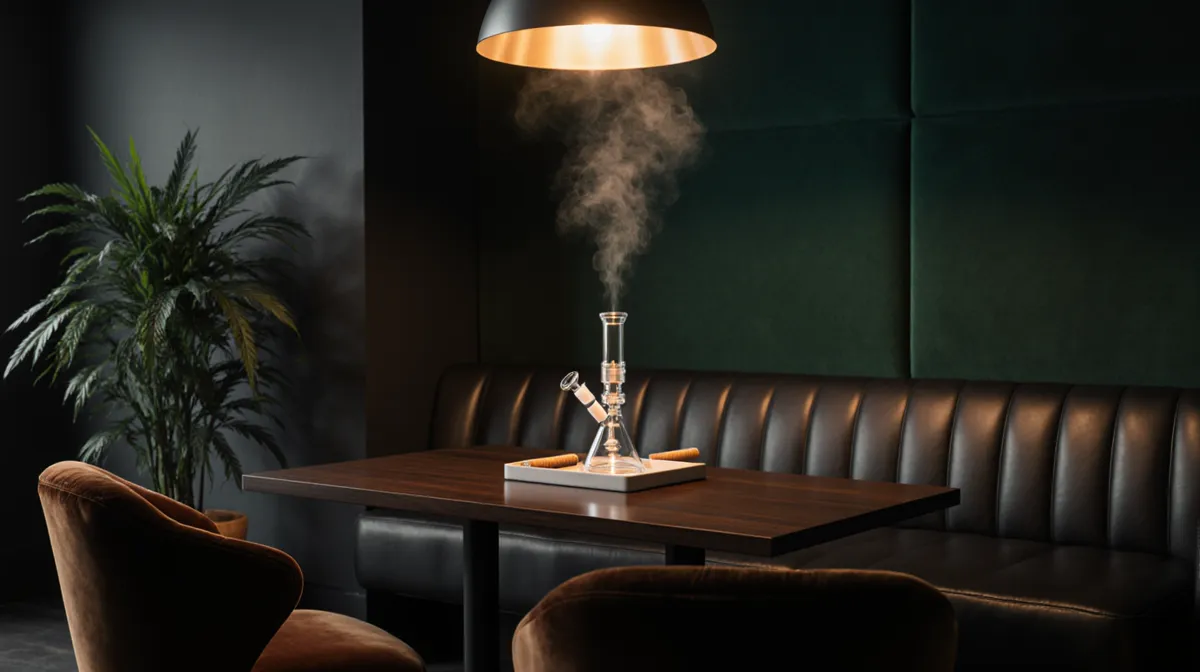
A cannabis consumption lounge is a licensed business where adults 21 and over can legally use cannabis on the premises. Think of it as the cannabis equivalent of a bar or a cigar lounge: a room with seating, ventilation, staff, and a set of house rules, where the thing you came to do is allowed indoors instead of being a problem.
That sounds simple, but it solves a genuinely awkward gap. In most legal states you can buy cannabis at a dispensary and you can use it in a private residence, and almost nowhere in between. A consumption lounge is the "in between" made legal.
Lounges go by several names depending on the state that licenses them: consumption lounge, cannabis hospitality venue, social consumption site, onsite consumption establishment, or the more informal "cannabis cafe." The license category matters more than the name, because it determines what the venue is allowed to sell and what you are allowed to bring.
Why lounges exist at all
Legal cannabis created a group of people with nowhere to legally consume what they just legally bought.
Tourists are the clearest case. Hotels are private property, and most have smoke-free policies that cover cannabis, with cleaning fees attached. Rental cars are out. Public streets, parks, and sidewalks are off limits in essentially every legal state, and a public consumption ticket is a real thing that real visitors get.
Renters are the next group. Plenty of leases ban smoking of any kind, and a tenant who follows the law at the dispensary can still violate a lease at home. People in federally subsidized housing face a stricter version of the same problem, because cannabis remains federally illegal regardless of state law.
Then there is the ordinary social case. Some people simply want to consume somewhere other than their own living room, with other adults, the way they might go out for a drink. Lounges are the regulated answer to all three, and they are also the reason many cities agreed to allow cannabis retail at all: a lounge moves consumption off the sidewalk and into a licensed, ventilated, age-controlled room.
The two main models: bring your own and onsite sales
Most lounges fall into one of two buckets, and knowing which one you are walking into saves an awkward moment at the door.
Bring your own. You purchase your cannabis somewhere else, at a licensed dispensary, and bring it with you. The lounge charges for the space instead of the product: a cover charge, a day pass, a membership, or a minimum food and drink order. These venues typically provide the gear, including tabletop water pipes, dab rigs, and vaporizers, either included or rented, and they clean it between guests.
Licensed onsite sales. The venue holds a license to sell cannabis for consumption on the premises, so you buy a pre-roll, an infused drink, or a single dab there and use it before you leave. This model looks the most like a bar. It is also the rarer of the two, because it requires the state to create a separate retail category, and many have not.
A few venues run a hybrid: a dispensary with an attached lounge, where you buy at the counter and walk into the adjoining room. Where local rules allow it, some also serve non-infused food and non-alcoholic drinks. Alcohol and cannabis licenses almost never overlap in the same room, so do not expect a lounge to also be a cocktail bar.
What a visit usually looks like
Expect the front door to work like a dispensary door. You show a valid government issued photo ID proving you are 21 or over, or the medical program credential your state uses, and staff check it before you go any further. No one gets in without it, and guests under 21 are not admitted at all, including in a group with adults.
Inside, the setup varies from a couple of couches to a full venue with a stage. Common features include a ventilation system that is usually the single most expensive thing in the building, tables with glassware, a sanitizing station, lockers or a check for your own supply, and staff who will show you how to use equipment you have not handled before.
On cost, plan for the venue fee and the product to be separate. A bring your own lounge might charge a modest entry or a rental for a rig; an onsite sales venue charges menu prices plus whatever cannabis taxes your state applies. Tipping norms track the rest of the hospitality world more than they track dispensaries, so if someone is cleaning glass and serving you, tipping is generally welcome.
Products are labeled in milligrams of THC just as they are at a dispensary, and the label is the right place to look before you consume. If you are unsure what a product will do, the staff at the counter are the people to ask. Inhaled cannabis and edibles behave very differently in terms of onset, which is exactly the kind of thing worth asking about before ordering rather than after.
Where you can actually find one
This is the part that changes, so treat any specific claim you read, including this one, as something to verify locally before you plan around it.
As a general shape: a minority of legal states have created a lounge license at all, and among those, only some have venues actually open. Nevada built a dedicated lounge program that put venues on and around the Las Vegas Strip. Colorado, California, Alaska, Illinois, Michigan, New Mexico, and New Jersey have each authorized some version of onsite consumption, though the rules, the rollout speed, and the number of open venues differ enormously between them. Several other states have passed enabling language that has not produced open doors yet.
Two complications keep the map messy. First, most states let cities and counties opt out, so a lounge can be legal statewide and banned in the specific town you are standing in. Second, licensing is slow and expensive, particularly the ventilation and odor control requirements, so the gap between "legal" and "open" is often measured in years.
Cannabis laws vary by state and change regularly. Nothing here is legal advice, and the only reliable source for what is allowed where you are is your state regulator and the venue itself.
Rules that trip people up
A few things catch first timers, and none of them are obvious from outside.
You cannot take it with you, sometimes. Some onsite sales licenses require that product purchased at the lounge be consumed at the lounge. Walking out with a half finished infused drink can be a violation for the venue and for you.
Driving is the big one. Driving under the influence of cannabis is illegal in every state, including the ones where cannabis itself is legal, and a lounge visit is not a defense. Plan your ride before you go, the same way you would for a bar. Our guide to driving with cannabis in the car covers the transport side of this.
Crossing state lines is still a federal issue. Cannabis you legally bought and legally consumed does not become legal to carry across a state border. Leave it where you bought it.
Smoking versus vaping is not always equal. Some venues, and some local ordinances, allow vaporizers and edibles but not combustion, often because of indoor clean air rules. If you were planning to smoke a joint, check first.
House rules apply on top of state rules. Venues set their own limits on sharing, on outside food, on what gear you can bring, and on how long you can stay. Staff enforce them, and they are the ones holding the license.
How to find a lounge near you
Start by confirming what your state and city allow, since that determines whether a lounge can exist near you at all. Our overview of where you can legally consume cannabis covers the public consumption side, and the state by state legality guide is a good orientation before a trip.
From there, search the way you would for any venue. Lounges are usually clustered in tourist areas and in cities that opted in early, they often list hours and cover charges on their own sites, and calling ahead is worth the ninety seconds: hours, membership requirements, and whether the lounge is bring your own or sells onsite are the three things most likely to differ from what you assumed.
If you are bringing your own, buy from a licensed shop first. You can browse licensed dispensaries on Weedtip to see what is near you, then purchase directly at the shop. Weedtip is a directory, so you browse here and buy there.
Finally, if it is your first time consuming in a social setting, the ordinary courtesies apply, and most of them are the same ones that apply at the counter. The same courtesies that work at a dispensary counter translate well to a lounge: ask questions, respect the staff, and do not touch other people's glass.